
Dendrophthoe pentandra
Dendrophthoe pentandra
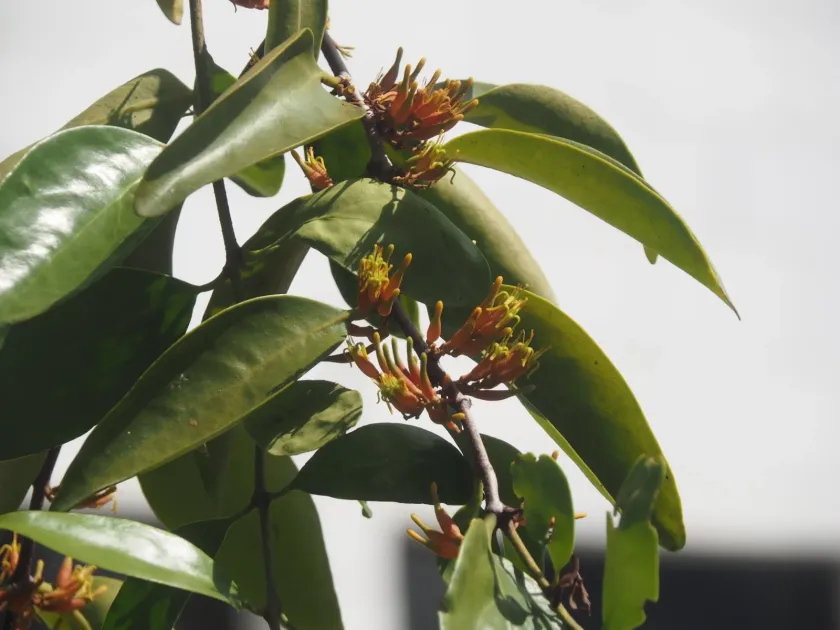
Description
Growing requirements
Dendrophthoe pentandra is a member of the Loranthaceae family, commonly known as the mistletoe family. This hemiparasitic plant is widely distributed across Southeast Asia, including countries like Indonesia, Thailand, and the Philippines.
Botanically, it is a perennial shrub that anchors itself onto the branches of host trees via specialized structures called haustoria. These structures allow the plant to penetrate the bark and tap into the host's xylem to obtain water and essential mineral nutrients.
The plant thrives in tropical climates characterized by high rainfall and humidity. It shows significant plasticity regarding host selection, often colonizing diverse tree species, including both forest trees and agricultural crops like mango or citrus.
Unlike traditional crops, Dendrophthoe pentandra does not require conventional soil cultivation. It relies on avian dispersal, where sticky seeds are transported by birds to new hosts, completing the life cycle of this hemiparasite.
In terms of ecological significance, it functions as a component of tropical ecosystems and possesses specific chemical properties that have led to its use in traditional ethnomedicine throughout its native range.
Main diseases and pests
The primary threat to the existence of this plant is the clearing of tropical forests, which destroys its natural habitat and potential host trees. Conversely, in agriculture, the plant is often targeted for eradication.
Agricultural threats include the manual removal of the plant by pruning affected tree limbs. If left unchecked, heavy infestation of Dendrophthoe pentandra can weaken host trees, reducing crop yields and overall tree vitality.
Pathogenic threats to the plant itself include various fungal infections that can compromise its structure under excessively damp conditions. Such infections can lead to the necrosis of haustorial connections.
Insect herbivores, specifically leaf-chewing larvae, often feed on the foliage of this hemiparasite, but they are rarely effective enough to control the population in a commercial orchard setting.
Effective management requires integrated strategies that involve regular monitoring of orchard trees and early intervention through sanitation practices to maintain host tree health and productivity.