
Dendrolobium triangulare
Dendrolobium triangulare
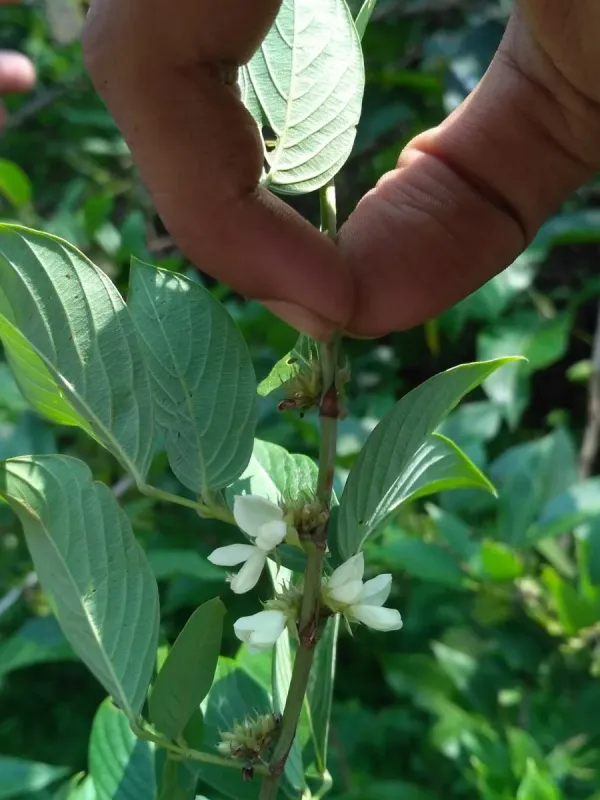
Description
Sowing dates
Dendrolobium triangulare is a tropical shrub that requires specific temperature conditions for optimal germination. In its native habitats, sowing is typically initiated at the beginning of the rainy season to ensure constant soil moisture levels.
The seeds possess a hard, protective coat that necessitates scarification to improve water absorption. Mechanical or chemical treatment of the seed surface significantly increases the uniformity of seedling emergence.
Optimal germination occurs at temperatures between 25 and 28 degrees Celsius. Providing a well-draining, nutrient-rich substrate is essential for the healthy initial development of the root system.
Sowing in a nursery environment allows for better protection of delicate seedlings before they are transplanted to the field. Proper spacing is required to ensure that each plant receives adequate light and air circulation as it matures.
Vegetative propagation via cuttings is a viable alternative to seed-based methods, allowing growers to maintain specific traits and establish production fields more quickly in controlled environments.
Growing requirements
As a member of the Fabaceae family, this species thrives in tropical climates where high temperatures persist year-round. It is highly sensitive to frost and cannot withstand prolonged periods of cool weather.
The plant performs best in light, loamy, or sandy soils with excellent drainage. Waterlogging is detrimental to its health, as it promotes root rot and reduces overall plant vigor in the long term.
Full solar exposure is preferred, although the species can adapt to partial shade during its initial growth stages. Consistent access to direct sunlight promotes dense foliage development and flowering.
Although it exhibits some drought tolerance, regular irrigation during dry periods is necessary for maximizing biomass production. Maintenance of moderate soil moisture is key to success.
The ability of Dendrolobium triangulare to fix atmospheric nitrogen via symbiotic bacteria enhances soil fertility, making it an excellent candidate for sustainable agricultural rotations.
Yield
The primary economic focus for this crop is the production of green biomass for forage purposes. The plant is valued for its rapid regeneration and ability to withstand multiple cuts within a single growing season.
Productivity peaks as the shrub establishes a robust root system, usually by the second year. Strategic harvesting schedules allow for continuous biomass availability for livestock feed.
Beyond its use as forage, the crop serves as a beneficial soil cover, protecting against erosion and enhancing the organic content of tropical soils through regular nitrogen enrichment.
Seed production is an additional yield component, which can be optimized by adjusting nutrient supply, particularly phosphorus and potassium, during the flowering and pod-forming stages.
Effective biomass management requires balanced fertilization and adherence to harvesting protocols that prevent exhaustion of the plant's metabolic reserves.
Main diseases and pests
Various species of aphids pose a common threat, specifically targeting the tender young shoots. Regular monitoring and early intervention are necessary to prevent the spread of these pests across the plantation.
Fungal diseases such as powdery mildew may develop if the canopy remains too dense or if humidity levels are excessive without adequate air circulation. Pruning and spacing are essential preventive measures.
Root rot is the most serious threat, usually associated with poorly managed irrigation or heavy, compacted soil types. Once established, root damage is often irreversible and leads to plant death.
Leaf-eating insects can cause significant defoliation during peak growth periods. Biological control measures are generally preferred to maintain the safety of the forage product.
- Aphids (Aphididae)
- Powdery mildew (Erysiphales)
- Root rot (Phytophthora)
- Defoliating insects
Harvesting
The optimal harvest timing for biomass occurs during the peak vegetative growth phase, just before the plant enters the reproductive stage. This ensures the highest nutritional profile, including crude protein content.
Mowing should be performed at a height of 15 to 20 centimeters. This regenerative stubble allows the shrub to sprout again rapidly, maintaining productivity for subsequent harvests.
Immediate handling is necessary following the harvest to preserve quality. The biomass must be dried properly or ensiled to prevent fermentation and nutrient loss before it reaches the end user.
Seed harvesting should be timed to coincide with the browning of the pods. Because the pods are prone to shattering, precision in timing is vital to minimize yield loss during the collection process.
After collection, seeds should be thoroughly cleaned and stored in a cool, dry environment to maintain high germination viability for the following planting cycle.