
Adiantum raddianum
Adiantum raddianum C. Presl
Description
Growing requirements
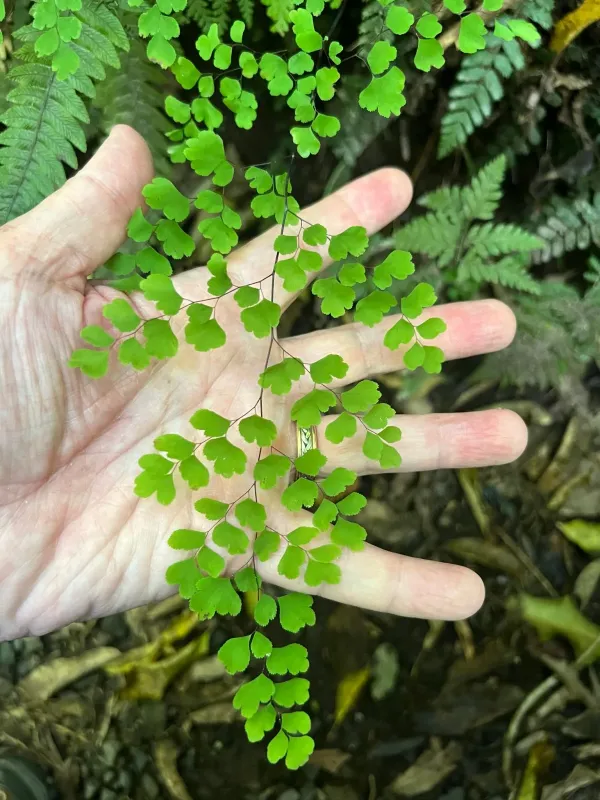
Adiantum raddianum, commonly known as the Delta Maidenhair fern, is a highly valued ornamental plant belonging to the Pteridaceae family. Originating from the tropical regions of South America, this fern is adapted to humid forest habitats where it thrives in shaded, sheltered environments.
The botanical structure of this species is defined by its delicate, finely divided fronds arranged on slender, wiry, dark-colored stipes. These fronds form an intricate, lace-like canopy that makes the plant an essential component in modern interior landscaping and commercial floriculture.
Optimal growth requires bright but indirect sunlight. Direct exposure to solar radiation is detrimental to the fronds, causing rapid dehydration and necrosis of the leaf segments. Consistent ambient light levels are critical for maintaining the vibrant green color and structural integrity of the plant.
Soil requirements for this culture are specific; it necessitates a well-draining, acidic, and organic-rich medium. Professional growers often utilize peat-based mixes amended with perlite or vermiculite to ensure high aeration and sufficient water retention for the sensitive rhizome system.
Temperature management is another key aspect of agrotechnology for Adiantum raddianum. It flourishes in stable temperatures between 18°C and 22°C. Fluctuations, especially cold drafts, can cause immediate leaf drop and stress, significantly impacting the commercial quality of the potted crop.
Main diseases and pests
Scale insects represent a primary pest challenge, adhering to the underside of fronds and extracting plant sap. These pests not only weaken the plant but also produce honeydew, which serves as a substrate for secondary fungal infections that drastically lower the marketability of the product.
Spider mites are prevalent in environments with insufficient humidity, leading to yellowing of the fronds and a loss of aesthetic appeal. Regular misting and environmental monitoring are essential preventative measures against these microscopic arachnids in both greenhouses and homes.
Root rot is the most common physiological disorder caused by over-irrigation or improper drainage systems. When the substrate remains saturated, the roots lose their ability to respire, quickly leading to the collapse of the entire plant structure and systemic decay.
Fungal pathogens such as Gray Mold (Botrytis) can emerge if air circulation is stagnant and humidity levels are too high. Prompt removal of damaged or decaying plant tissue is necessary to isolate the pathogen and protect the healthy portions of the crop in large-scale production.
Integrated pest management (IPM) practices, including the use of targeted biological controls and maintaining hygienic greenhouse conditions, are recommended to minimize chemical reliance. Regular scouting of the crop helps detect early symptoms, allowing for effective and timely intervention.