
Adiantum hybrid
Adiantum hybr.
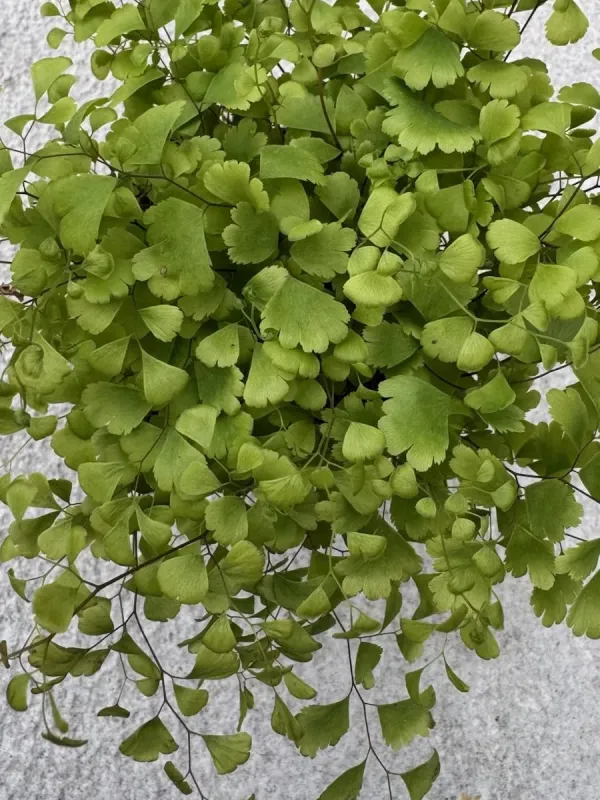
Description
Growing requirements
Adiantum hybrid is a decorative perennial fern belonging to the Pteridaceae family. Originating from tropical and subtropical climates, this plant is valued for its delicate, fan-shaped foliage and slender, dark stems that add elegance to any growing environment.
The culture requires a porous, well-draining, and slightly acidic substrate. A mixture of peat, perlite, and leaf mold is recommended to ensure both aeration and moisture retention, which are vital for the delicate rhizome system of the fern.
Environmental conditions must mimic a humid, shaded forest floor. High atmospheric humidity, ranging from 60% to 80%, is essential for keeping the fronds lush and preventing them from becoming brittle or developing brown, dry edges.
Temperatures should remain stable, ideally between 18°C and 22°C. While the plant can tolerate slight fluctuations, cold drafts or exposure to direct heating sources during winter months will rapidly cause the fronds to wilt and desiccate.
Watering must be frequent and consistent, using soft or filtered water at room temperature. The substrate should remain moist but never waterlogged, as excessive water will suffocate the roots and lead to inevitable crown rot.
Main diseases and pests
Scale insects are a primary threat to Adiantum hybrids, often hiding on the underside of fronds. They drain the plant of essential nutrients, leading to stunted growth and yellowing of the delicate leaflets.
Spider mites frequently attack when the air becomes too dry. These microscopic pests create fine webbing and cause the fronds to lose their luster, requiring immediate intervention with miticides and increased humidity.
Fungal leaf spot diseases may occur if the foliage is sprayed with water and allowed to remain damp for too long in stagnant air. Ensuring proper air circulation is critical to prevent these fungal infections.
Root rot is the most common physiological issue, resulting from poor drainage or overwatering. Infected plants will often show sudden wilting, even when the soil appears moist, signaling severe damage to the root system.
Proper sanitation is the first line of defense. Regularly removing dead or yellowing fronds helps maintain vigor and prevents the accumulation of spores or pests within the plant canopy.