
Adiantum polyphyllum
Adiantum polyphyllum Willd.
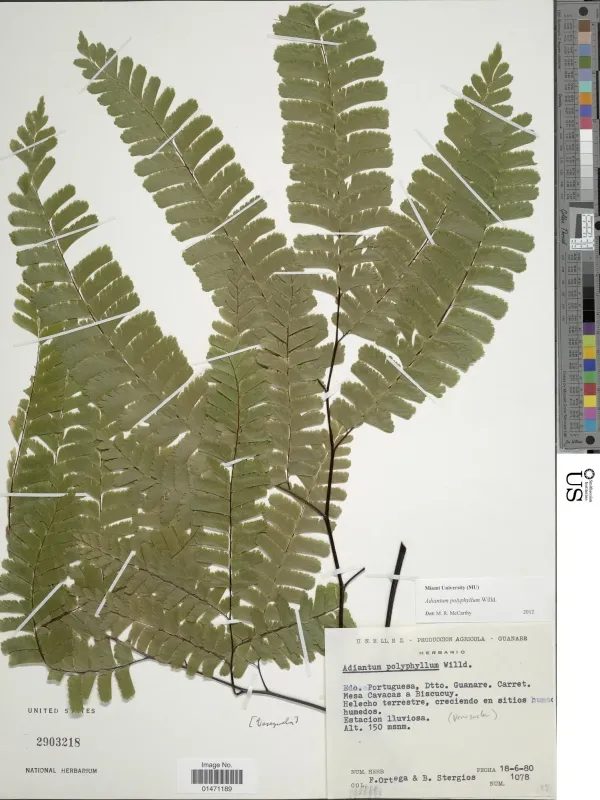
Description
Growing requirements
Adiantum polyphyllum, a member of the Pteridaceae family, is a distinct fern species native to the tropical regions of South America. It is widely recognized for its aesthetic appeal and is often utilized as an ornamental plant in temperate greenhouse environments.
Botanically, this species is characterized by large, tripinnate fronds that can grow quite long, creating a delicate, lace-like appearance. The rhizomes are creeping in nature, requiring adequate spacing within pots to allow for healthy development and spreading of the plant structure.
The plant thrives in bright, indirect light conditions. Direct sunlight exposure should be avoided as it often scorches the foliage and stunts growth. A temperature range between 18°C and 24°C is ideal for maintaining the physiological balance of this fern throughout the year.
Soil requirements for Adiantum polyphyllum include a high-quality, well-draining substrate rich in organic matter. A mix of peat moss, leaf mold, and perlite is generally recommended to provide the necessary moisture retention while ensuring roots do not remain waterlogged.
Humidity management is critical for the success of this species. Maintaining a constant relative humidity of at least 65-70% is essential for healthy frond production. Utilizing pebble trays with water or mechanical humidifiers is a standard agricultural practice in indoor cultivation.
Main diseases and pests
Scale insects and mealybugs represent the primary pest threats to Adiantum polyphyllum. These pests hide in the crevices of the fronds and stems, necessitating manual inspection and the use of targeted horticultural oils or systemic insecticides for control.
Spider mites often attack the plant when ambient humidity drops below optimal levels. These microscopic pests create fine webbing and cause leaf chlorosis, requiring a swift increase in moisture and the application of suitable miticides to rectify the issue.
Root rot, caused by fungal pathogens such as Pythium or Phytophthora, is the most common disease associated with improper irrigation practices. Maintaining a consistent drainage cycle and ensuring the pot has sufficient holes is vital for plant health.
Fungal leaf spot can occur if water sits on the fronds for too long or if the plant is kept in an environment with poor air circulation. Removing affected fronds and improving environmental conditions are the first steps in effective disease management.
Regular sanitation of tools and the isolation of new specimens are recommended agricultural practices to prevent the introduction and spread of pests and diseases within a collection or greenhouse production area.