
Delonix floribunda
Delonix floribunda (Baill.) Capuron
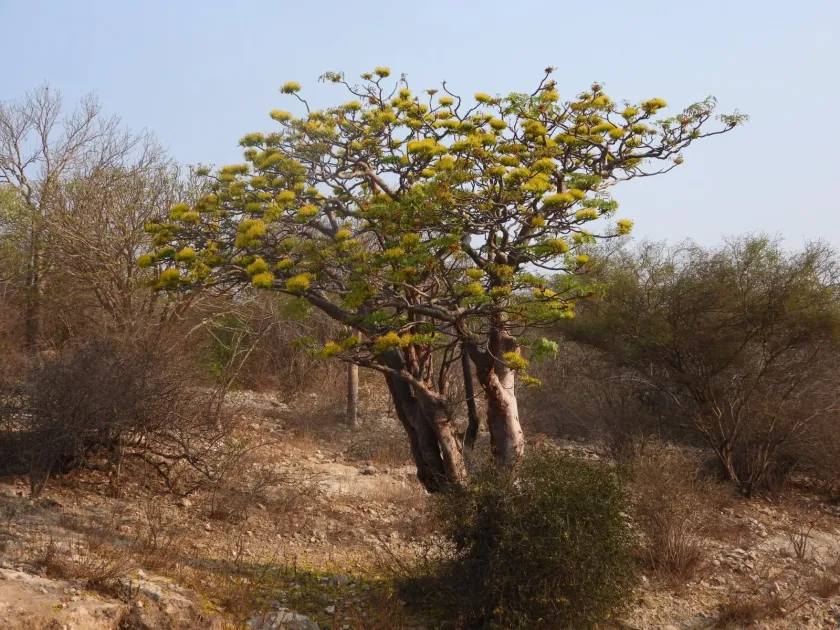
Description
Growing requirements
Delonix floribunda (Delonix floribunda) is a unique botanical species belonging to the Fabaceae family, native to the dry deciduous forests of Madagascar. It is recognized for its distinctive yellow flowers and drought-tolerant characteristics.
The plant requires full sun exposure to thrive and produce its signature blossoms. In agricultural or horticultural settings, it is essential to mimic its natural environment by providing high light intensity and avoiding prolonged periods of excessive humidity, which can lead to leaf drop.
Soil requirements focus on excellent drainage properties. A sandy-loam substrate with added perlite is considered optimal for maintaining root health. The plant exhibits high sensitivity to waterlogged soils, making precise irrigation management a key success factor.
Climate adaptation is restricted to tropical and sub-tropical zones. In cooler climates, this species must be maintained in greenhouses where temperatures can be strictly controlled, ensuring protection against frost, which is fatal to young specimens of this tree.
The primary use of Delonix floribunda is in ornamental landscape design. Its aesthetic value as an exotic flowering tree makes it a preferred choice for botanical gardens and specialized landscaping projects, contributing to its status as a sought-after collector's item.
Main diseases and pests
Major phytopathological threats include root rot caused by stagnant water in the root zone. Regular monitoring of the substrate moisture is mandatory to prevent anaerobic conditions from occurring within the planting medium.
Insects like aphids and scale insects pose significant risks to young growth. Integrated pest management strategies, involving both manual removal and the application of mild horticultural oils, are effective in controlling infestations without damaging the foliage.