
Dasyphyllum brasiliense
Dasyphyllum brasiliense
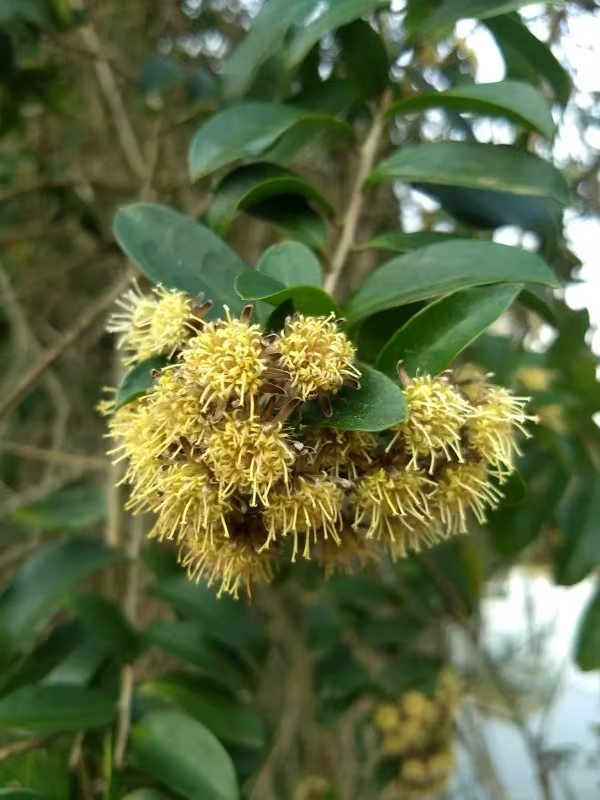
Description
Sowing dates
Dasyphyllum brasiliense is a woody perennial plant belonging to the Asteraceae family, native to South American ecosystems. Unlike herbaceous crops, its development is centered around long-term woody biomass accumulation.
Propagation is typically carried out via seeds, which require specific environmental conditions, such as warm temperatures and consistent moisture, to break dormancy and trigger germination.
Cultivation practices in nurseries involve using well-drained, nutrient-rich substrates to support the delicate root systems of young seedlings during their early growth stages.
Strategic planting times are usually aligned with the onset of the rainy season to allow the plants to establish themselves before the challenges of the dry season occur.
Maintaining proper spacing is crucial for ensuring adequate airflow and light penetration, which are essential for healthy canopy development.
Growing requirements
The species thrives in tropical climates characterized by stable, warm temperatures and high humidity levels throughout the active growth period.
It prefers acidic to neutral soils with excellent drainage, as the species is highly sensitive to waterlogging, which can cause significant root damage.
This plant is highly photophilous and requires full sun exposure to maintain optimal physiological processes and support the development of its characteristic leaves.
Management of water resources is critical; in regions with seasonal drought, supplemental irrigation is necessary to maintain soil moisture levels within the root zone.
Soil quality management, including the addition of organic matter, helps to emulate the natural forest floor conditions that favor the plant's growth.
Yield
The primary utility of Dasyphyllum brasiliense lies in its wood production and potential interest for the pharmacological industry due to its chemical profile.
Harvesting strategies are based on long-term forestry cycles, where wood quality improves as the plant reaches maturity over several years.
The plant also serves as an important component in agroforestry, contributing to soil conservation and the protection of biodiversity in its native range.
Honey production is an additional potential yield, as the plant's flowers attract various pollinators, making it useful for local apiculture.
Economic benefits are maximized when the crop is integrated into sustainable management systems that prioritize both biomass and ecological health.
Main diseases and pests
Fungal pathogens represent the most significant threat to the health of Dasyphyllum brasiliense, particularly under conditions of poor ventilation and excessive moisture.
Pests such as scale insects and spider mites can infest the leaves and stems, requiring proactive monitoring and potential management to prevent growth stagnation.
Nutrient deficiencies may occur if the soil pH deviates from the optimal range, potentially making the plant more susceptible to opportunistic infections.
Integrated pest management (IPM) practices, emphasizing biological control over synthetic chemicals, are recommended for maintaining plantation health.
- Root rot (fungal pathogens)
- Scale insects (Coccidae)
- Spider mites
- Leaf spot diseases