
Dacryodes rostrata
Dacryodes rostrata
Description
Sowing dates
Propagation of Dacryodes rostrata in natural habitats primarily occurs via seeds, which lose viability quickly after being extracted from the fruit; therefore, sowing must be performed immediately after harvest.
In commercial cultivation, vegetative methods such as grafting or budding are preferred to maintain the superior traits of mother trees and to significantly reduce the time required to reach the first fruiting stage.
The optimal time for transplanting nursery saplings into the field is the beginning of the rainy season, as the high humidity and soil moisture levels facilitate the successful establishment of the root system.
When establishing new orchards, it is crucial to maintain a spacing of at least 8–10 meters between trees, as the mature canopy requires substantial room to grow and flourish properly.
Young plants require shading during their initial years, often achieved by planting under a canopy of taller species or by installing protective screens to shield delicate leaves from intense tropical sunlight.
Growing requirements
Dacryodes rostrata is a member of the Burseraceae family, native to the tropical rainforests of Southeast Asia, including regions across Indonesia, Malaysia, and the Philippines.
The crop is highly demanding regarding temperature, requiring consistently warm conditions throughout the year and proving unable to withstand even mild frost, as its physiology is adapted to stable tropical climates.
Successful growth requires deep, well-drained soils rich in organic matter, as the tree is sensitive to waterlogging in the root zone, which can easily lead to the development of harmful root pathogens.
High relative humidity is a key environmental requirement, making cultivation most effective in areas characterized by regular rainfall and the absence of prolonged, severe dry seasons.
While the tree prefers sunny locations, it is tolerant of partial shade during its juvenile stage, allowing for more flexible site management in agroforestry systems.
Yield
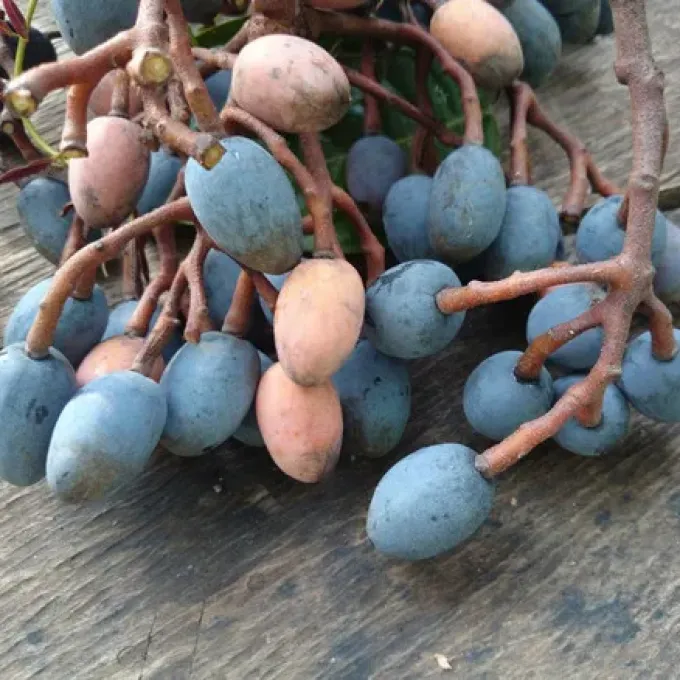
Dacryodes rostrata is prized for its edible fruits, which are elongated drupes featuring a distinctive beak-like appendage, a feature that provides the basis for both its botanical and common names.
The fruits contain high levels of plant-based fats and proteins, often categorizing them as oil-bearing fruits; in nutritional value and texture, they are comparable to other members of the genus such as the African pear.
The yield of a mature tree can be quite substantial, provided that appropriate agricultural management practices are followed and environmental conditions during flowering and fruit set remain favorable.
The pulp is traditionally consumed after boiling or soaking in hot water, a preparation method typical for several Dacryodes species that serves as a vital dietary source for local populations.
Beyond culinary use, the seeds and pulp are sometimes processed to extract oils for small-scale industrial applications or traditional medicine within their native regions.
Main diseases and pests
The primary threats to Dacryodes plantations are fungal infections that thrive in high-humidity tropical conditions, causing damage to foliage and ripening fruits, often leading to premature abscission.
Various pests, including curculionids and certain caterpillar species, can cause significant damage to the crop by feeding on fruit tissue, thereby reducing marketability and total yield quality.
Poor soil aeration and inadequate drainage serve as major agricultural risk factors, as they create an environment that encourages the colonization of the root system by various pathogenic soil-borne microorganisms.
Ants and small rodents may damage the bark of young saplings, creating entry points for secondary infections that can weaken the overall health and vigor of the tree.
Regular monitoring of tree health and the prompt removal of diseased branches or damaged fruit are essential practices for managing disease outbreaks without relying heavily on chemical pesticides.
Harvesting
Harvesting is performed manually as fruits reach maturity, signaled by a distinct change in the skin color to a deeper, richer hue, which acts as the primary indicator for ripeness.
Because the fruits are highly perishable once harvested, they must be brought to market or processed immediately to maintain the integrity and nutritional quality of the fruit pulp.
During the harvest process, care must be taken to avoid physical damage to the tree bark or branches, as such injuries can impede future yields or provide entry points for pathogens.
Post-harvest handling involves sorting the fruits by size and ripeness, ensuring that any specimens showing signs of pest or disease damage are excluded to prevent cross-contamination during storage and transport.
Storing the produce in a cool, well-ventilated environment can extend the shelf life slightly, but Dacryodes rostrata remains a crop that requires rapid post-harvest logistics to ensure successful delivery to consumers.