
Cytinus ruber
Cytinus ruber
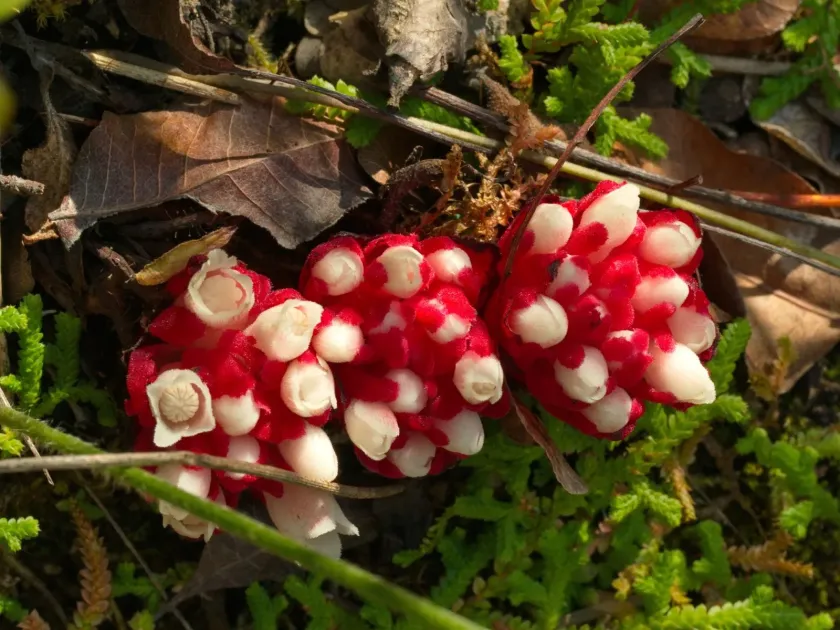
Description
Growing requirements
Cytinus ruber is a fascinating parasitic plant belonging to the Cytinaceae family. Lacking chlorophyll, this species is entirely dependent on its host plant, typically shrubs from the Cistus genus, to obtain essential nutrients and water for survival.
The origin and distribution of this plant are strictly tied to the Mediterranean basin, covering southern European countries and northern Africa. It thrives in open scrublands where the host plants are abundant and the soil conditions are suitable for its complex parasitic lifecycle.
Botanically, the plant is characterized by its vivid red or pink fleshy flowers, which are the only parts that emerge above ground. The vegetative structure is reduced and modified into haustoria—specialized organs that penetrate the root tissues of the host to facilitate nutrient uptake.
The climate requirements include a typical Mediterranean regime, characterized by mild, wet winters and hot, dry summers. The plant is highly specialized and requires specific soil alkalinity and a stable population of host plants to maintain its cycle, making it unsuitable for traditional farming.
Regarding its utility, Cytinus ruber has no agricultural value. It is primarily studied for its evolutionary adaptations and ecological role. Conservationists monitor these populations closely as they serve as indicators of the health of specific Mediterranean scrub habitats.