
Cymodocea rotundata
Cymodocea rotundata
Description
Growing requirements
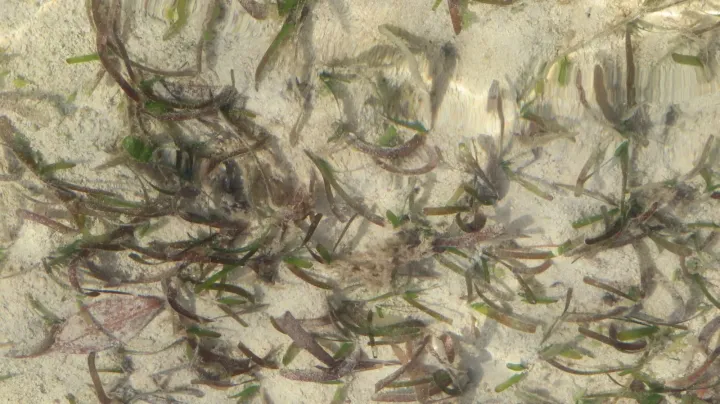
Cymodocea rotundata is a perennial marine seagrass species belonging to the family Cymodoceaceae. It is widely distributed across the shallow coastal waters of the tropical Indian and Western Pacific Oceans, where it forms extensive submerged meadows.
The plant is characterized by a creeping rhizome system that anchors it firmly in sandy or silty substrates. Its leaves are linear and ribbon-like, distinctively rounded at the tips, which is a key botanical feature used for identification in the field.
Growth requirements for this species include high water clarity and stable salinity levels. It thrives in intertidal and shallow subtidal zones where adequate sunlight can penetrate the water column to support active photosynthesis.
While not a traditional agricultural crop, it acts as a primary producer in marine ecosystems. It performs the vital function of sediment stabilization, which protects coastal regions from wave erosion and maintains water quality by trapping organic matter.
Management practices for this species focus primarily on environmental conservation. Unlike terrestrial farming, cultivation of seagrass is limited to restoration projects where damaged habitats are replanted using nursery-grown rhizome cuttings to restore degraded coastal beds.
Main diseases and pests
The primary threats to Cymodocea rotundata include coastal development and dredging, which increase water turbidity. Reduced light penetration significantly hinders the plant's ability to produce energy, often leading to large-scale mortality of seagrass beds.
Eutrophication resulting from agricultural runoff and sewage discharge promotes the growth of epiphytic algae and phytoplankton. These organisms compete for space and nutrients, and can smother the leaves of the seagrass, effectively killing the plant population.
Climate change poses a long-term risk due to rising sea temperatures. Extreme heat events can induce physiological stress in the plants, making them more susceptible to common marine pathogens and fungal infections that target the rhizome structure.
Physical damage caused by boat anchors, propeller scarring, and bottom-trawling fishing practices causes significant fragmentation of seagrass meadows. Recovery from such damage is notoriously slow due to the slow-growing nature of the rhizomatous network.
Invasive species and overgrazing by local fauna can further stress existing populations. Effective protection requires the establishment of marine protected areas and strict regulations regarding coastal construction to ensure the survival of this foundational species.