
Cymodocea isoetifolia
Cymodocea isoetifolia
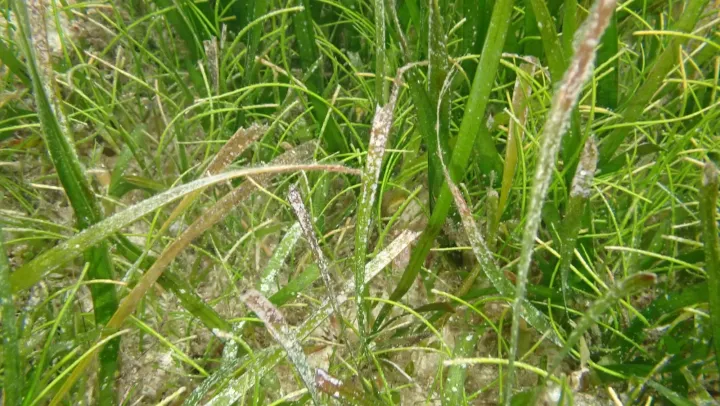
Description
Growing requirements
Cymodocea isoetifolia is a perennial seagrass belonging to the Cymodoceaceae family. It is a vital marine plant that plays an essential role in stabilizing coastal sediments and providing habitat for diverse aquatic fauna.
The plant is native to the tropical and subtropical regions of the Indian and Pacific Oceans. It typically thrives in shallow, clear coastal waters on sandy or sandy-mud bottoms, often forming extensive meadows that cover large areas of the sea floor.
Optimal growth conditions for this species include stable salinity levels and temperatures ranging from 20°C to 30°C. Sunlight penetration is the most critical environmental variable, as the plant requires clear water to maintain its photosynthetic rate.
The morphology of the species is characterized by creeping, branched rhizomes that allow for efficient asexual reproduction and colonization of new substrates. The leaf blades are narrow and linear, adapted to withstand moderate currents without structural damage.
In terms of agricultural or industrial potential, research focuses on utilizing seagrass biomass for soil conditioning. Due to its high mineral content, processed remnants of these marine plants are being studied as organic additives for coastal sandy soils.
Main diseases and pests
The primary threat to Cymodocea isoetifolia populations is nutrient pollution from agricultural runoff. Increased nitrogen and phosphorus levels stimulate excessive algae growth, which blocks sunlight and kills the underlying seagrass.
Dredging and bottom trawling for fishing activities represent significant mechanical threats. These actions disrupt the delicate sediment layers, uprooting the rhizome system and preventing the recovery of the seagrass meadows for many years.
Coastal development and land reclamation projects lead to direct habitat loss. By altering the water flow and increasing sedimentation rates, these human activities make it impossible for the species to survive in its natural environment.
Pathogenic outbreaks, often exacerbated by water temperature spikes, can lead to widespread leaf necrosis. When plants are under stress from pollution, their natural immunity decreases, making them prone to viral and fungal infections.
Grazing pressure from megaherbivores like dugongs and sea turtles also impacts population density. While grazing is natural, an imbalance in the predator-prey relationship can lead to localized depletion of the seagrass beds if they are not allowed to recover.