
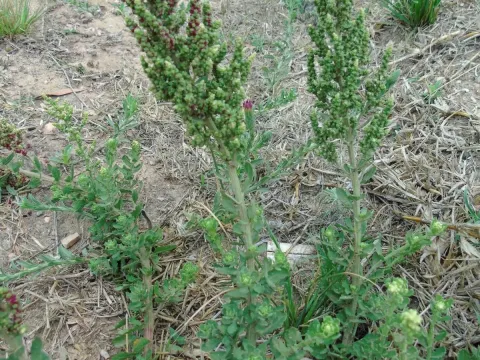
Cycloloma
Cycloloma
Cycloloma, known as the winged pigweed, is an annual plant that propagates primarily through seeds. Germination typically begins in early spring once soil temperatures reach a suitable threshold for growth.
What the section contains

Cycloloma
The ideal sowing window, if cultivation is intended, is mid-spring. Seeds require shallow placement in the soil, usually no deeper than 1–2 centimeters, to ensure proper light absorption and moisture uptake.
In natural conditions, the seeds are dispersed by wind, allowing the plant to populate vast areas. Successful germination relies heavily on consistent soil moisture during the first few weeks of the life cycle.
The plant exhibits high seed vigor, which contributes to its status as a prolific colonizer in disturbed soils. Its seed bank can persist in the soil for several seasons, ensuring population renewal.
Growers should monitor sowing depth and soil compaction to ensure the best results. Proper spacing is essential, as individual plants can grow into large, spherical structures that occupy significant surface area.
Belonging to the Amaranthaceae family, Cycloloma is native to the central regions of North America. It is a highly adaptable species that thrives in open, sunny environments with low to moderate precipitation.
The plant is not overly demanding regarding soil fertility and prefers light, sandy, or alkaline substrates. It is particularly well-adapted to environments that are considered marginal for more sensitive crops.
Cycloloma is remarkably drought-tolerant, utilizing physiological mechanisms that allow it to survive in regions with frequent heatwaves and water scarcity. This resilience makes it a dominant species in arid habitats.
Adequate ventilation and low humidity are crucial for the plant's health, as they help prevent moisture-related stress. The plant requires full exposure to sunlight to reach its maximum size.
When designing management plans, soil drainage should be considered as a priority. While the plant can tolerate saline conditions, excessive waterlogging may lead to root health issues.
Cycloloma is remarkably resistant to most agricultural pathogens due to its robust natural defenses. It does not suffer from major diseases that would typically require intensive fungicidal treatment.
Common agricultural pests such as aphids or leaf-feeding beetles may occasionally be found on the plant. However, these rarely cause significant economic damage to the plant's structural integrity.
The primary threat associated with Cycloloma is its tendency to spread seeds across agricultural fields, acting as a tumbleweed. This makes it a significant nuisance for farmers, requiring proactive mechanical management.
Management strategies focus on removing the plants before they reach the flowering and seed-setting stages. Early detection and clearing are the most effective ways to control its footprint.
While chemical controls are available, they should be applied with precision to minimize impact on surrounding vegetation. Mechanical weeding and field edge maintenance remain the preferred practices for control.