
Cyclea peltata
Cyclea peltata
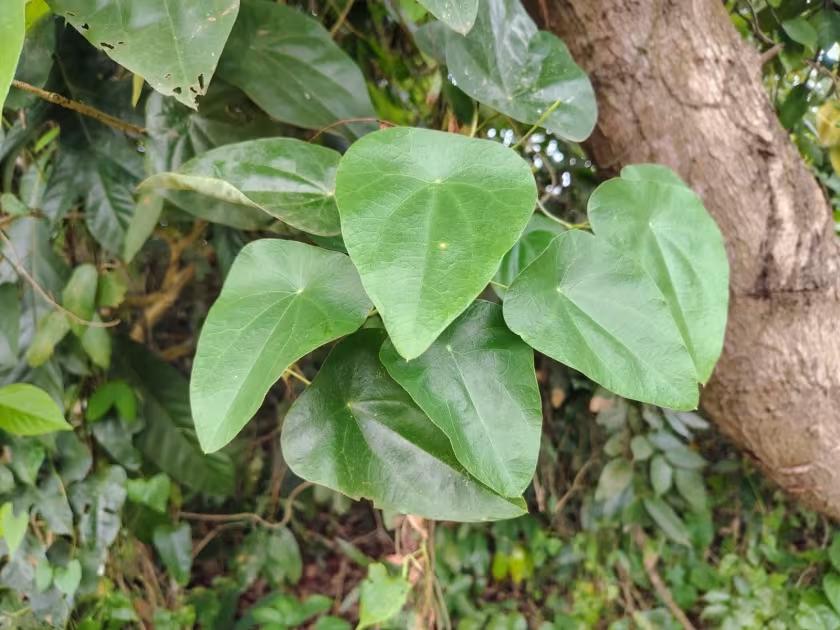
Description
Sowing dates
Cyclea peltata is primarily propagated through seeds or stem cuttings. Seed sowing is typically conducted in controlled greenhouse environments to protect delicate seedlings from external environmental stress and to ensure optimal germination rates.
The ideal time for sowing is during the spring when temperatures consistently exceed 20 degrees Celsius. Seeds should be pre-treated by soaking in water to improve imbibition and break dormancy, leading to a more uniform emergence of seedlings.
Vegetative propagation via cuttings involves selecting healthy, semi-hardwood stems. These cuttings are placed in a well-aerated medium, such as a mix of peat and perlite, under high humidity and indirect light to facilitate rooting.
Transplanting into the field must be avoided until all risks of frost have passed. Providing structural support, such as trellises or poles, is essential during the initial planting phase to accommodate the climbing habit of the vine.
Spacing between plants should be carefully managed to allow for adequate ventilation, which is crucial for preventing fungal outbreaks in the dense canopy that develops as the plants mature during the growing season.
Growing requirements
Cyclea peltata is a perennial woody climber belonging to the Menispermaceae family. It is native to tropical and subtropical regions of Southeast Asia and India, where it thrives in moist, shaded forest understory habitats.
The crop requires fertile, well-draining soil with a neutral to slightly acidic pH. Avoiding waterlogging is critical, as the root system is highly susceptible to rot when subjected to excessive soil moisture or poor drainage conditions.
This plant prefers environments with filtered sunlight or partial shade. Exposure to intense, direct tropical sunlight for prolonged periods can result in leaf scorching and reduced metabolic activity, hindering the accumulation of bioactive compounds.
Optimal growth occurs at temperatures ranging between 22 and 32 degrees Celsius, accompanied by high humidity. In temperate climates, successful cultivation is strictly limited to greenhouses or indoor climate-controlled facilities.
Agricultural management includes regular fertilization using organic materials to sustain vigorous growth. Pruning is recommended to maintain plant shape and manage biomass density, ensuring that energy is directed towards root development.
Main diseases and pests
The plant is relatively robust, but it can be affected by various pests in high-density cultivation. Aphids and spider mites are the most common insects that thrive in the foliage, potentially reducing plant vigor.
Fungal infections, particularly powdery mildew, represent a significant threat when humidity is high and air circulation is insufficient. These pathogens can quickly spread across plantations, necessitating early detection and intervention.
Root rot, driven by pathogens such as Pythium, is a major concern in soils with poor drainage. Implementing a rigorous irrigation schedule and ensuring proper soil structure are the most effective preventative measures against these threats.
Integrated pest management strategies are preferred over heavy chemical applications. The use of biological control agents and neem-based extracts helps in maintaining the health of the plants while adhering to medicinal quality standards.
Sanitation practices, including the regular removal and destruction of infected foliage or plant debris, are vital to preventing the spread of diseases. Monitoring the underside of leaves for early signs of infestations is a fundamental practice for any grower.
Harvesting
Economic value is primarily derived from the roots and stems, which are harvested for their alkaloids, particularly cycleanine. Harvesting typically takes place when the plant reaches maturity, usually after three to four years of cultivation.
The roots are carefully unearthed, cleaned of soil, and washed. Proper post-harvest handling is critical to ensure that the active pharmaceutical ingredients are not degraded by prolonged exposure to heat or improper drying techniques.
Stems are harvested periodically during the growth phase. Cut materials must be dried immediately in a ventilated, shaded area or using professional drying equipment to reduce moisture content below 12%, preventing microbial growth.
Storage of the processed raw material requires cool, dark, and dry conditions to maintain the stability of the chemical constituents. Airtight containers are often used to protect the harvested material from humidity and light degradation.
The medicinal applications of Cyclea peltata include its use as an anti-inflammatory and antipyretic agent. Consistent quality control during harvest ensures that the raw material meets the required standards for pharmaceutical extraction.