
Cyclea barbata
Cyclea barbata
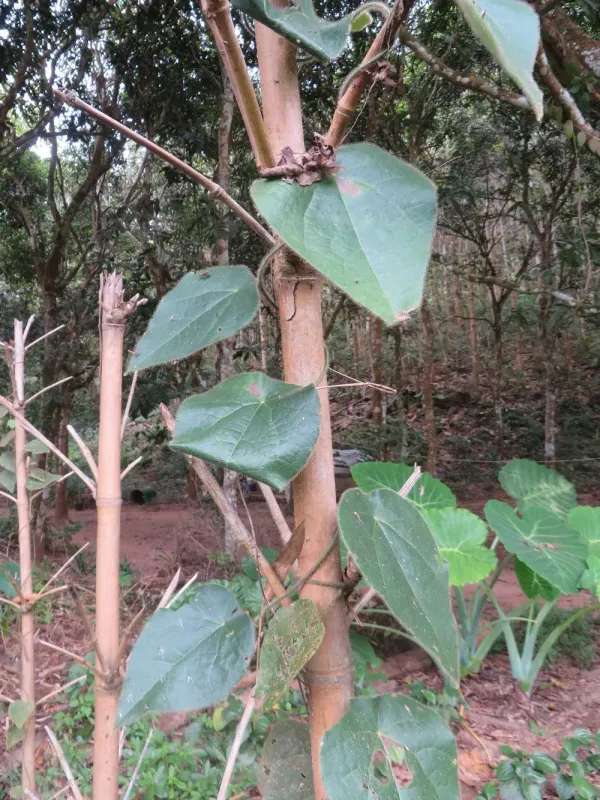
Description
Sowing dates
The propagation of Cyclea barbata is primarily carried out by seeds or vegetatively through stem cuttings. In the tropical regions of its origin, sowing occurs at the beginning of the rainy season when the soil moisture is sufficient to support germination.
Seeds require pre-treatment, including soaking, to accelerate the germination process. Sowing is conducted in prepared beds or containers with a nutrient-rich substrate that provides good drainage.
The optimal temperature for seedling emergence is between 25 and 30 degrees Celsius with stable air humidity. Germination may be irregular, so it is important to keep the seedbeds free of weeds during the early stages of development.
For vegetative propagation, mature stems are cut into segments with 2–3 nodes. Rooting is carried out in shaded areas with high humidity, ensuring protection from direct sunlight while the root system develops.
A crucial factor during planting is the presence of supports for the future vine. Cyclea barbata is a climbing plant that requires vertical support to ensure normal photosynthetic activity of its leaves.
Growing requirements
Cyclea barbata, belonging to the Menispermaceae family, is a typical representative of the tropical flora of Southeast Asia. The crop prefers humid tropical forests where consistently high air temperatures are combined with the absence of sharp fluctuations.
The plant grows successfully in loose, fertile soils rich in organic matter. It is important to maintain a neutral or slightly acidic soil reaction for the optimal absorption of nutrients.
For normal growth, the vine requires a sufficient level of light, although the plant can tolerate light shading in the lower parts of the stem. High atmospheric humidity is a critical condition for active vegetative growth.
In industrial-scale cultivation, waterlogged areas must be avoided as the root system is sensitive to excessive moisture and oxygen deficiency in the rhizosphere. Regular irrigation during dry periods significantly increases the total biomass of the plant.
In open-field conditions, fertilization with complex fertilizers containing high nitrogen levels is required to stimulate green mass growth, as the leaves are the primary product collected for the production of food jelly.
Yield
The primary economic product of Cyclea barbata is its leafy mass, which contains specific pectic substances. Yield depends directly on lighting conditions, soil quality, and the intensity of vine care.
The first harvest of commercial mass is carried out 6–8 months after planting, once the plant has formed a dense canopy of leaves. Frequent harvesting stimulates tillering and the growth of new lateral shoots.
Collection efficiency increases with intensive cultivation systems, which include regular pruning of the stems. This allows the plant's resources to be directed toward the regeneration of leaf tissue, which is essential for processing into gelling agents.
The average yield per hectare varies depending on planting density and the climatic factors of the specific region. Under optimal conditions, plantations can produce several full harvests per year.
The quality of the raw material is evaluated based on pectin content and leaf cleanliness. To preserve useful properties, the collected mass must be processed quickly or subjected to proper drying at controlled temperatures.
Main diseases and pests
Like most vines, Cyclea barbata is susceptible to fungal infections during periods of excessive air humidity and poor air circulation. In such cases, leaf spotting of various etiologies may occur.
Pests such as aphids and spider mites often infest young leaves and shoots, sucking cell sap. This leads to stunted growth and reduced quality of the commercial product.
To combat pests in agricultural settings, both biological control methods and environmentally friendly insecticides are employed. It is important to follow quarantine measures when establishing new planting areas.
Nematode infestation poses a serious threat when grown on the same plots for many years. Crop rotation and the application of organic amendments help reduce the pathogenic pressure of the soil.
Timely removal of damaged leaves and sanitary pruning help contain the spread of infections within the plantation. Prevention remains the primary tool for crop protection.
Harvesting
The harvest of Cyclea barbata involves the manual picking of leaves and young shoots. Since the product is intended for the food industry, the cleanliness of the raw material during harvesting is of paramount importance.
The timing of harvest is determined by the maturity of the leaves: the highest gelling properties are found in leaves of medium age. Very young or very old leaves may produce a less stable product.
After collection, the raw material is immediately sorted to remove damaged parts and foreign impurities. Thorough cleaning is necessary for the subsequent extraction of chlorophyll and pectins.
In farming conditions, short-term storage of the raw material in a cool place before processing is practiced. The use of refrigeration allows the shelf life of the collected leaves to be extended to 24–48 hours.
Processing technology begins with crushing the leaves and extracting them in water. This process converts the plant mass into a specific jelly, which is widely used in the traditional cuisine of the region where it is grown.