
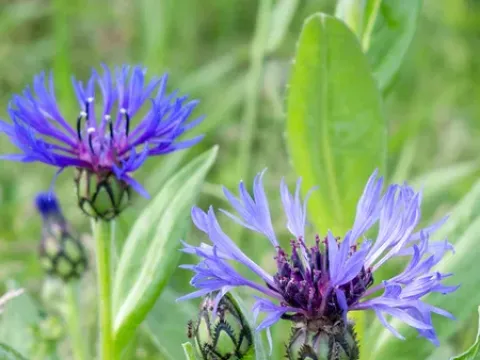
Cornflower
Cyanus
Cornflower (Cyanus segetum), a member of the Asteraceae family, is a highly adaptable plant suitable for various climatic conditions. The optimal sowing time is early spring, once soil temperatures reach 5–8 degrees Celsius, though autumn sowing is also practiced in milder climates.
What the section contains

Cornflower
The seeding rate typically ranges from 6 to 10 kg per hectare, depending on seed quality and soil type. Seeds should be sown at a shallow depth of 1–2 cm to ensure proper germination, as they are sensitive to deep burial in the soil.
In large-scale production, observing crop rotation is essential, as the plant can be sensitive to soil depletion. The best preceding crops are cereals or fallow fields to minimize weed pressure.
Seedlings usually emerge within 10–14 days. Early cultivation, such as light harrowing, is recommended to break the soil crust and manage early-season weed competition without damaging the young plants.
Cornflower exhibits significant cold resistance, allowing early-sown plants to tolerate light spring frosts, which provides an advantage in regions with fluctuating spring temperatures.
Cornflower requires open, sunny locations to thrive. Shade leads to leggy, weak stems and a significant reduction in the concentration of active pharmaceutical compounds in the petals.
The plant performs best on well-drained, light loamy or sandy soils with a neutral pH. Heavy clay soils that tend to waterlog are unsuitable as they hinder root development and plant health.
While cornflower is moderately drought-tolerant, consistent moisture during the budding and flowering stages is critical for maximizing the yield of quality floral raw material.
As a valuable honey-producing plant, cornflower attracts pollinators effectively. When planning fields, proximity to apiaries can be mutually beneficial for both honey production and seed set.
Fertilization should be handled with care; excessive nitrogen promotes lush foliage at the expense of flower production. A balanced approach using phosphorus and potassium helps strengthen stems.
Cornflower is utilized in the pharmaceutical, cosmetic, and food industries. The primary product is the marginal, funnel-shaped blue petals, harvested at the stage of full expansion.
The dry flower yield typically ranges from 50 to 100 kg per hectare. Harvesting is a labor-intensive process that usually requires hand-picking to ensure the quality and purity of the product.
Post-harvest, the raw material must be dried immediately in a shaded, well-ventilated area or in mechanical dryers at temperatures not exceeding 45 degrees Celsius to preserve the pigment.
As a honey plant, cornflower produces approximately 30–40 kg of nectar per hectare, providing an additional economic incentive for farmers to incorporate it into their crop rotation.
Product value depends heavily on purity; any contamination with tubular florets, stems, or leaves significantly reduces the market price and complicates the final processing stages.
Rust is the most common fungal disease affecting cornflower, presenting as orange spots on leaves and stems, which can lead to premature wilting and crop failure if left untreated.
High humidity levels increase the risk of powdery mildew and Fusarium wilt. Preventive measures include maintaining proper plant spacing and ensuring adequate field aeration to reduce moisture buildup.
Aphids are the primary insect pests, frequently colonizing flower buds and sucking sap. This activity causes flower deformation and renders the raw material unsuitable for harvest.
Some species of cutworms and moths may also damage the foliage and flower buds, necessitating careful monitoring during the early stages of plant development.
Chemical control must be applied with extreme caution, especially when the crop is intended for medicinal use, due to strict limitations on pesticide residues and pre-harvest intervals.
Harvesting is performed selectively as flowers on the same plant mature at different times. Throughout the season, multiple passes are usually required to collect the petals efficiently.
For high-quality results, pickers must carefully remove only the marginal blue florets, avoiding the inclusion of green bracts or tubular florets, which are considered impurities.
When grown for seed production, harvest begins when the flower heads turn brown. Timing is crucial to prevent seed shattering caused by wind or mechanical vibration during field operations.
The harvested plant material should be dried in sheds with good airflow before threshing. Threshing equipment should be adjusted to low settings to avoid crushing the seeds.
Cleaned seeds should be stored in a cool, dry environment with low humidity to maintain high germination rates for the following planting season.