
Culcasia mannii
Culcasia mannii
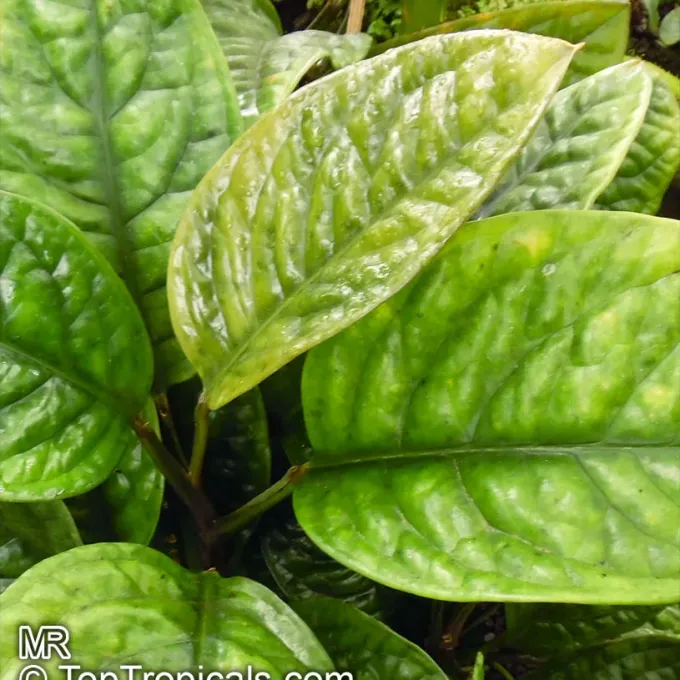
Description
Growing requirements
Culcasia mannii is a distinct perennial species belonging to the Araceae family. Characterized by its robust, vining growth habit, this plant functions primarily as an epiphyte in its natural habitat, utilizing its aerial roots to anchor onto forest trees and other structures within the tropical understory.
Native to the humid, tropical forests of Central and West Africa, this species thrives in environments with high ambient humidity and low-to-moderate light intensity. It is perfectly adapted to the shaded canopy layers, where temperatures remain consistently warm and stable throughout the year.
Botanically, Culcasia mannii features leathery, dark green foliage that provides a lush appearance. The inflorescence consists of a spadix sheltered by a spathe, a typical morphological trait for aroids, although the bloom is often inconspicuous compared to its foliage.
The cultivation requirements focus on mimicking its natural floor environment. A well-draining, humus-rich potting mix is essential. Peat-based substrates amended with perlite or orchid bark allow for the necessary aeration that prevents the root system from suffocating in compacted soil.
Temperature management is critical for the healthy development of this plant. It prefers a range between 20°C and 28°C, and it is sensitive to thermal shocks. Regular, consistent watering is required, allowing the top inch of the soil to dry out between applications to maintain root health.
Main diseases and pests
The most common health issues for Culcasia mannii arise from improper moisture management. Overwatering typically triggers fungal pathogens, leading to root rot, which is often irreversible if not addressed through immediate repotting and fungicide application.
Spider mites represent a major threat during periods of low indoor humidity. These pests feed on the cell sap, causing the foliage to lose its vibrant green color and develop pale stippling, eventually leading to chlorosis and leaf drop if left untreated.
Mealybugs are another recurring pest, specifically clustering in the tight junctions between the leaf petiole and the stem. Their presence is indicated by a white, cottony substance, which necessitates thorough cleaning and systemic insecticide treatment to prevent secondary infections.
Scale insects can pose a challenge, attaching themselves to the stems and petioles where they extract plant sap. Due to their protective shells, they are difficult to manage without persistent efforts, such as manual removal followed by the application of horticultural oils.
Poor ventilation combined with high humidity can promote bacterial leaf spots. To mitigate this risk, it is important to ensure adequate air circulation and to avoid wetting the foliage during watering, especially in environments with cooler ambient temperatures.