
Culcasia lancifolia
Culcasia lancifolia
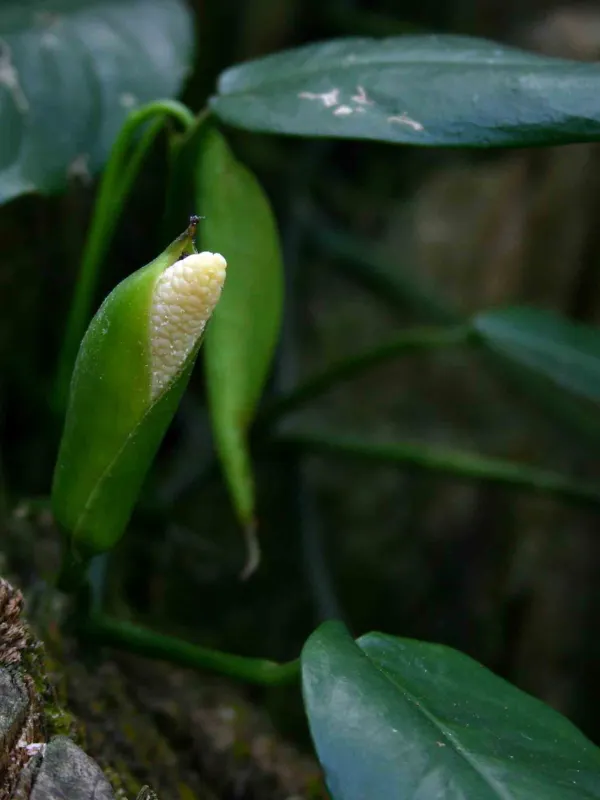
Description
Growing requirements
Culcasia lancifolia is a member of the Araceae family, native to the tropical rainforests of West and Central Africa. This evergreen perennial is biologically adapted to thrive in warm, high-humidity environments.
The plant requires a consistent ambient temperature range between 20°C and 28°C. It is highly intolerant of frost and cold drafts, which can cause immediate physiological stress and significant foliage loss.
Soil requirements involve a rich, well-draining organic medium. A mixture of peat, bark, and perlite provides the ideal balance of moisture retention and root zone aeration necessary for the plant's health.
As an understory plant in its natural habitat, Culcasia lancifolia performs best in shaded or semi-shaded areas. Intense, direct sunlight can result in bleached leaves and significant tissue damage.
Maintenance of high humidity is essential for successful cultivation. Consistent watering, combined with a drainage system that prevents water stagnation, ensures the plant maintains its structural integrity and growth rate.
Main diseases and pests
The most common pests affecting Culcasia lancifolia include spider mites and mealybugs. These thrive in low-humidity environments and can rapidly weaken the plant by feeding on its sap.
Root rot remains a primary threat, typically caused by improper drainage and overwatering. If the substrate remains waterlogged for extended periods, pathogens like Pythium can colonize the root system.
Fungal leaf spot diseases may appear if the plant is grown in conditions with poor air circulation. Proper spacing between individual plants is recommended to prevent the spread of spores and fungal outbreaks.
Scale insects are occasional pests that attach themselves to the stems and undersides of leaves. Regular inspection of the plant and manual cleaning are effective non-chemical control measures.
Nutritional deficiencies, often manifested as yellowing or chlorosis, can occur if the pH levels deviate significantly from the optimal range. Regular soil testing and application of balanced fertilizers are vital for maintenance.