
Parsley fern
Cryptogramma crispa
Description
Growing requirements
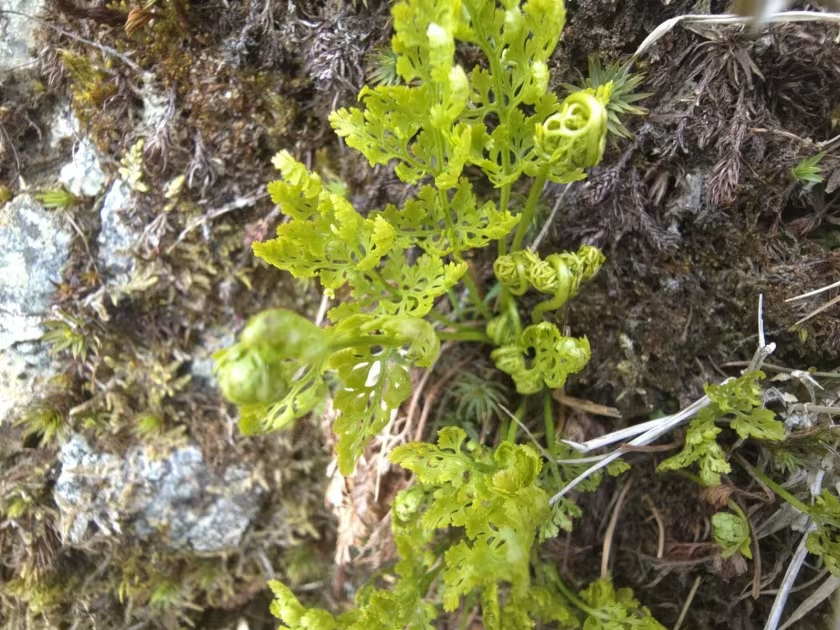
Parsley fern (Cryptogramma crispa) is a distinct, small-sized perennial fern belonging to the Pteridaceae family. It is naturally found in mountainous regions across the Northern Hemisphere, typically colonizing scree slopes and rocky crevices.
A notable botanical trait of this species is its dimorphic fronds. The sterile fronds are finely divided and parsley-like in appearance, while the fertile fronds are longer, stiffer, and narrower, designed specifically for spore dispersal in high-altitude environments.
For successful cultivation, this fern requires a cool, moist environment with excellent air circulation. The soil must be gritty, well-draining, and slightly acidic to mimic its native rocky habitat, as the plant is highly sensitive to boggy or nutrient-rich conditions.
The plant thrives in partial shade and is intolerant of intense heat or direct summer sunlight, which can quickly dehydrate the fronds. In a garden setting, it is best suited for north-facing rockeries where the root zone can remain cool and protected.
The primary horticultural use of Cryptogramma crispa is as a specialist plant for rock gardens and alpine collections. Due to its slow growth and specific microclimate needs, it remains a prized specimen among collectors of hardy, mountainous flora.
Main diseases and pests
The most significant threat to Parsley fern is fungal infection caused by waterlogged soil and high humidity without proper ventilation. Poor drainage typically leads to crown and root rot, which is often fatal for the plant.
Garden pests such as slugs and snails are highly attracted to the delicate sterile fronds. During the spring growing season, these pests can cause extensive aesthetic damage, necessitating consistent manual removal or the application of protective barriers around the plant.