
Crypteronia paniculata
Crypteronia paniculata
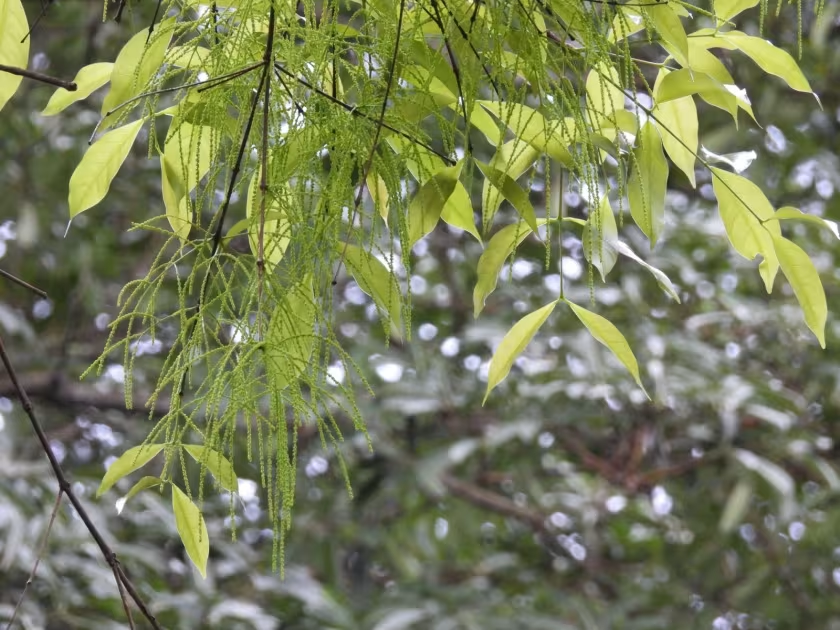
Description
Growing requirements
Crypteronia paniculata is a prominent evergreen tree species belonging to the Crypteroniaceae family. Characterized by its sturdy growth, this tree can reach heights of up to 30 meters, playing a vital role in the canopy structure of tropical forests in Southeast Asia.
The native distribution of the species spans from India through Malaysia and the Philippines. It thrives in high-temperature environments with consistent annual rainfall, typically found in lowland and montane tropical rainforests where humidity levels remain high.
Regarding soil requirements, Crypteronia paniculata favors deep, well-drained loamy soils or rich alluvial deposits. It is sensitive to waterlogged conditions, which can inhibit root respiration and lead to the development of fungal pathogens within the root zone.
Botanically, the species is distinguished by its characteristic panicle inflorescences and opposite leaves. Its root system is relatively shallow, which is an adaptation to nutrient-cycling in tropical soils, but it also necessitates protection from severe wind exposure in managed forest stands.
Cultivation success depends on providing appropriate light conditions. While older trees can tolerate moderate shade, seedlings require sufficient direct or filtered sunlight to achieve vigorous vegetative growth during their primary development stages.
Yield
The economic utility of Crypteronia paniculata is centered primarily on its timber. The wood is valued for its moderate hardness and uniform texture, making it suitable for a variety of carpentry, light construction, and furniture-making applications in local industries.
Beyond traditional timber use, the tree is often utilized in local rural development for building sheds and household implements. Its mechanical properties ensure that it can be processed into various shapes with standard woodworking tools without significant splitting.
Yield estimation for managed stands suggests a steady accumulation of biomass under favorable conditions. Successful long-term productivity relies on thinning and site management practices to ensure that individual trees reach the desired maturity for harvest.
The species also plays a significant ecological role, providing habitat and resources for diverse tropical insects and avian populations, which indirectly supports the surrounding agroforestry systems and biodiversity.
While experimental research into other commercial uses is ongoing, current focus remains on sustainable timber harvesting and the integration of these trees into diversified forest management plans to prevent over-exploitation.
Main diseases and pests
Fungal diseases constitute the primary threat to the health of Crypteronia paniculata plantations. Excessive soil moisture often leads to root rot and collar decay, particularly in areas with poor natural drainage systems that inhibit normal tree functions.
Pest issues include attacks by wood-boring beetles and bark insects. These pests create galleries within the wood, which compromise the structural integrity of the timber and invite opportunistic infections by bacteria and fungi.
Climate-related stress, particularly extended drought periods, renders the trees more susceptible to infestation. Reduced vitality lowers the tree's ability to produce sap and chemical compounds that act as natural defenses against herbivorous insects.
Management strategies involve rigorous sanitation practices, including the removal of dead or declining specimens to prevent the spread of infestations. Minimizing physical damage to the bark during silvicultural operations is also essential to maintain tree health.
Invasive climbing plants and vines represent a constant threat to young Crypteronia paniculata trees. If left unmanaged, these climbers can envelop the crowns of young trees, depriving them of essential sunlight and physically stressing the main stem.