
Crypteronia griffithii
Crypteronia griffithii
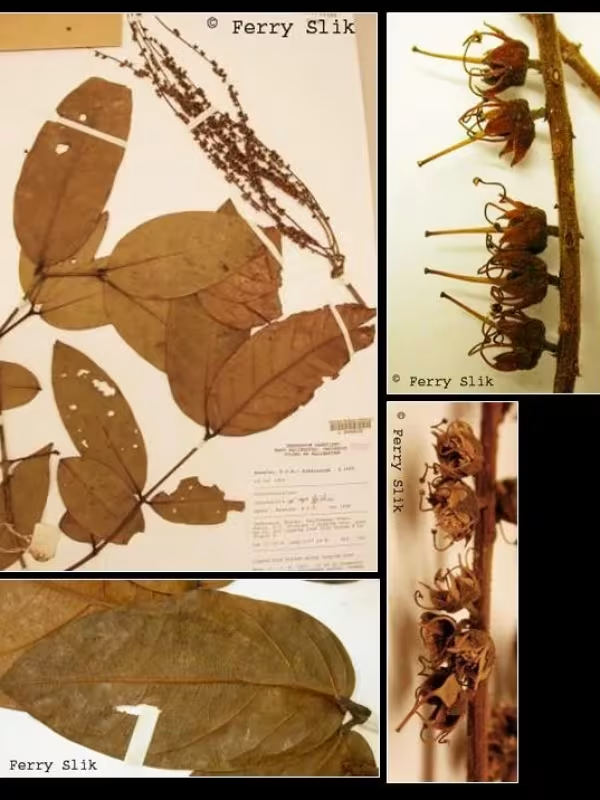
Description
Sowing dates
Crypteronia griffithii is primarily managed within forestry and agroforestry systems rather than industrial monoculture. Propagation relies on fresh seeds, as they exhibit short-term viability and must be sown immediately after collection during the moist season.
The ideal substrate for germination consists of well-drained soil rich in organic matter. Temperature stability is crucial, with germination rates peaking in environments maintained between 25 and 28 degrees Celsius.
In natural habitats, dispersal is driven by fauna, so nurseries must simulate forest floor conditions to support seedling health. Consistent moisture is required, but drainage must be excellent to avoid fungal damping-off.
Once seedlings reach a height of 30 to 40 centimeters, they are ready for hardening-off. This process ensures they can withstand the transition to field conditions, where root system sensitivity becomes a factor during transplanting.
Acclimatization periods last up to one year, during which shade cover is essential. Protecting young plants from direct sun prevents leaf scorching and ensures balanced metabolic activity during the early growth stages.
Growing requirements
As a member of the Crypteroniaceae family, this species requires specific tropical conditions to thrive. It is endemic to rainforest ecosystems that maintain warm temperatures throughout the entire year.
The tree prefers deep, alluvial, or loamy soils that facilitate deep root penetration and proper aeration. Waterlogged conditions are detrimental and often lead to root rot, making site selection critical for long-term success.
Light requirements shift as the plant matures; while seedlings thrive in partial shade, the tree eventually demands full canopy access to support its crown development. This makes it an ideal candidate for mixed-species forestry.
Sensitivity to drought is a limiting factor for this species. In regions with marked dry seasons, supplemental irrigation is necessary to prevent premature leaf shedding and reduced biomass accumulation.
High levels of annual precipitation, typically exceeding 2000 mm, are vital. High ambient humidity supports the tree’s physiological processes, including transpiration and nutrient uptake, which are essential for vigorous growth.
Yield
The economic value of Crypteronia griffithii is derived primarily from its timber. It is a slow-to-medium growing species, meaning that returns on investment are realized over long-term forestry cycles.
Under favorable conditions, the trees reach harvestable dimensions within 30 to 40 years. Timber yield per hectare is managed through selective logging techniques to maintain the forest's overall ecological health.
The wood is appreciated for its uniform density and texture, making it suitable for high-quality cabinetry and construction. Its inclusion in forest restoration projects provides both ecological benefits and future timber resources.
Beyond timber, the species contributes to carbon sequestration efforts in tropical regions. Its ability to thrive in secondary forests makes it a valuable asset for land rehabilitation and environmental management.
Seed production from mature specimens is generally sufficient to sustain natural regeneration within the plantation, allowing for a self-perpetuating cycle of forest growth.
Main diseases and pests
Phytophthora root diseases are the primary threats, particularly in poorly drained soils where stagnant water creates an environment conducive to fungal proliferation and seedling mortality.
Leaf-feeding insects, such as various caterpillar species, can cause localized damage. While usually not fatal to mature trees, heavy infestations can significantly retard the growth of younger plants.
Environmental pressures, such as habitat fragmentation and loss of natural pollinators, represent significant threats to the long-term genetic diversity of wild Crypteronia griffithii populations.
Plantation-grown specimens can be vulnerable to stem borers if they are stressed by poor soil conditions or physical damage. Proper site management and forest hygiene are the primary preventative measures.
Competition from invasive plant species, especially vigorous climbers and lianas, can suppress young trees. Regular weeding is required during the first years of establishment to ensure the saplings emerge above the ground cover.
Harvesting
Timber harvesting is conducted through selective felling to ensure the forest ecosystem remains functional. The timing of the harvest is determined by dendrometric indicators, specifically when trunk diameters meet specific industrial standards.
Logging operations require professional care to avoid collateral damage to the surrounding vegetation. In tropical climates, harvesting is typically planned for the drier months to optimize logistical processes and log transport.
Post-harvest site cleanup is essential to reduce the risk of secondary pest outbreaks. By removing debris and promoting natural regeneration, forest managers ensure the sustainability of the timber supply.
The mechanical processing of the timber occurs at specialized mills, where the wood’s favorable working properties make it easy to process into planks, furniture components, or structural materials.
Documentation of yield is maintained by calculating the total volume of processed timber per harvest unit, emphasizing the importance of adherence to sustainable forestry certification standards.