
Crudia lanceolata
Crudia lanceolata
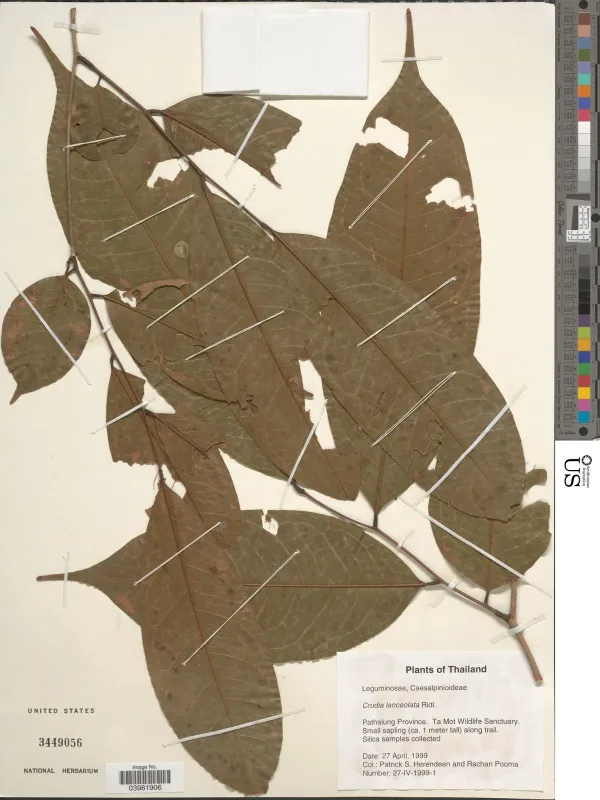
Description
Growing requirements
Crudia lanceolata is an evergreen tree species classified within the Fabaceae family. It is natively distributed across tropical regions, typically found in humid forests where the climate remains consistently warm throughout the year.
The tree requires a specific tropical environment to thrive, characterized by high atmospheric humidity and avoidance of temperature extremes. Success in cultivation depends on mimicking these natural conditions to support steady development and physiological health.
Soil requirements involve deep, fertile, and well-drained substrates. The plant is particularly suited to alluvial soils found in riverine landscapes, where nutrients are abundant and the moisture level remains relatively stable for the root system.
Agricultural management of this crop involves maintaining the ecological balance around the plantation site. Because it is sensitive to environmental shifts, protection from cold winds and excessive dry air is crucial for the survival of young specimens.
Economically, Crudia lanceolata is recognized for its high-quality timber properties. The wood is valued for its density and durability, making it suitable for various woodcraft applications, while the tree also serves an ecological role in land conservation.