
Spreading Jacob's ladder
Polemonium reptans L.
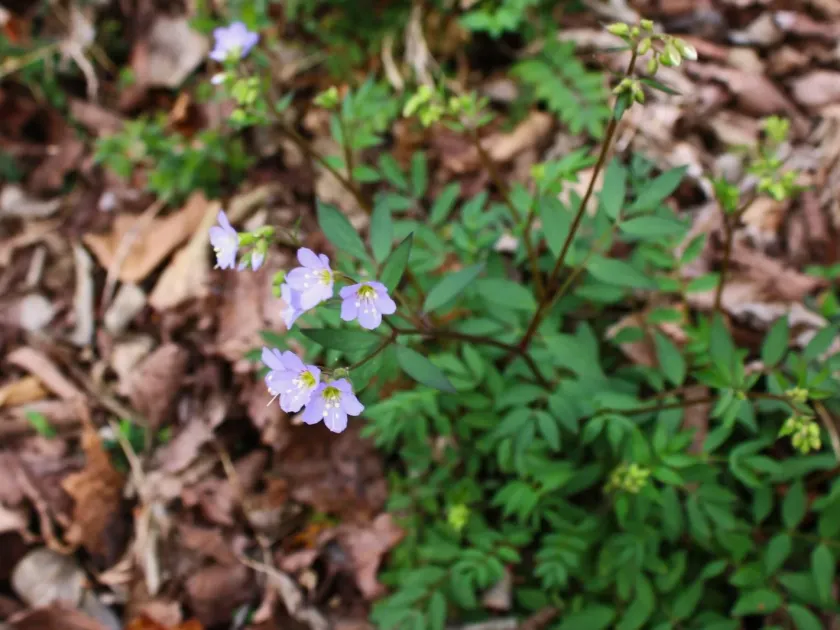
Description
Sowing dates
Polemonium reptans L., commonly known as Spreading Jacob's ladder, belongs to the Polemoniaceae family and is a perennial herb often grown for medicinal and ornamental purposes.
Seeds are typically sown in the fall for outdoor stratification or early in the spring, provided the seeds have undergone a chilling period of 30-45 days.
When sowing, seeds should be placed at a shallow depth of approximately 0.5 to 1 cm because they require sufficient light for optimal germination.
For industrial cultivation, spacing between rows is recommended to be between 45 and 60 cm to allow the plants enough room to develop their foliage and roots.
Seedlings usually emerge within two to three weeks; in their first year, plants develop only a basal rosette of leaves, requiring diligent weeding to ensure healthy growth.
Growing requirements
Native to North American woodland regions, the plant thrives in moist environments, which dictates its high water requirements during the growing season.
The ideal soil for cultivation is fertile, well-drained loam or sandy soil with a neutral or slightly acidic pH balance to prevent root diseases.
While the species prefers partial shade, it can adapt to sunnier locations if provided with adequate moisture to prevent the leaves from scorching under intense sunlight.
It is a highly hardy species, capable of surviving harsh winter conditions in temperate climates without the need for additional protective cover.
Regular irrigation is vital, particularly during the peak of summer or if the plants are situated in areas with high sun exposure to maintain high biomass production.
Yield
The plant is valued for its aerial parts (herb) and its rhizomes, which contain essential triterpene saponins used in pharmaceutical applications.
Yields of dried herb can reach 1.5 to 2.0 tons per hectare under optimal agricultural conditions and careful management practices.
Beyond its pharmacological use as an expectorant, the plant is also widely appreciated as a landscape ornamental for its beautiful blue flowers.
The highest concentration of bioactive compounds in the rhizomes is achieved by the second or third year of growth, which defines the best harvest schedule.
Post-harvest processing involves drying the plant material at controlled temperatures not exceeding 60 degrees Celsius to preserve its medicinal integrity.
Main diseases and pests
The most common threat to crop health is root rot, which typically develops in poorly drained soils where water accumulates and stagnates.
Excessive humidity and lack of air circulation around the plants can promote the growth of fungal infections like powdery mildew and various leaf spots.
Slugs and snails are the primary pests affecting the crop, as they often graze on the soft, succulent foliage, especially during moist spring weather.
Preventative management, including strict crop rotation and the prompt removal of plant debris, is essential to minimize the risk of pest and disease outbreaks.
Biological control agents are preferred over chemical pesticides to maintain the purity and safety of the material intended for pharmaceutical use.
Harvesting
Harvesting the aerial parts is best performed during the full flowering stage, as this is when the concentration of medicinal compounds is at its peak.
Rhizomes are harvested in the autumn after the plant has entered dormancy or in the early spring before the new growth starts to appear.
After collection, rhizomes must be thoroughly cleaned of soil, washed in cold running water, and separated from any residual stems or foliage.
Drying is a critical step, requiring well-ventilated areas or specialized drying equipment to ensure the material does not spoil before storage.
- Cut the aerial parts roughly 5-10 cm above the soil surface.
- Ensure that roots are brittle and clean before final storage.
- Store the dried material in a cool, dark, and dry environment.