
Cousinia libanotica
Cousinia libanotica
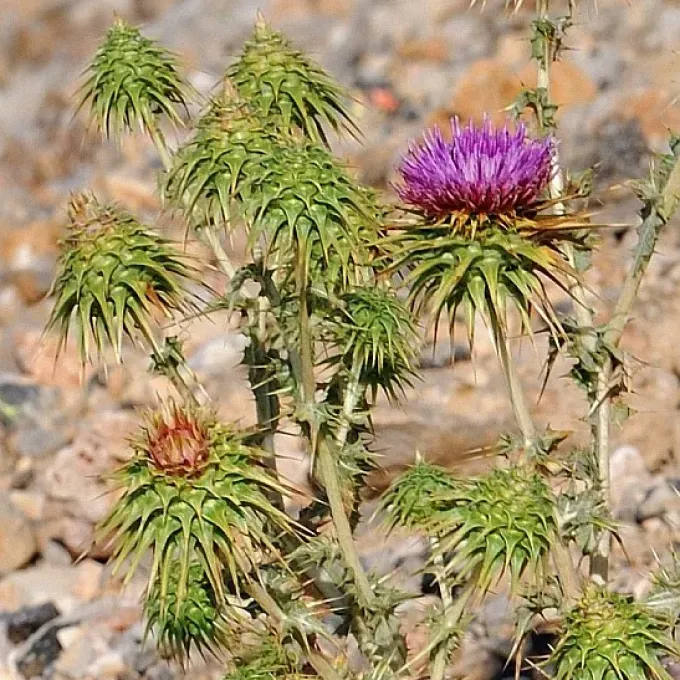
Description
Growing requirements
Cousinia libanotica is a perennial herbaceous plant belonging to the Asteraceae family. This species is native to the mountainous regions of the Middle East, specifically adapted to the harsh environmental conditions of Lebanese high-altitude ecosystems.
Botanically, the plant is characterized by a sturdy, often spiny structure that provides natural protection against herbivores. Its extensive taproot system is specifically evolved to penetrate rocky terrain and extract deep-seated moisture during arid summer months.
The cultivation of this plant requires high levels of solar radiation. It thrives in environments with intense sunlight and significant diurnal temperature fluctuations, which are typical for its natural alpine and subalpine habitats.
Soil requirements are quite specific for this species: it demands well-drained, porous substrates, preferably with a high lime content. Waterlogging must be strictly avoided, as the root system is highly susceptible to decay in heavy, saturated soil conditions.
In terms of agricultural and commercial potential, Cousinia libanotica is primarily viewed as a niche decorative plant for xeriscaping. Ongoing botanical research also investigates its chemical composition for potential applications in ethnopharmacology and specialized plant breeding.