
Sulfur cosmos
Cosmos sulphureus Cav.
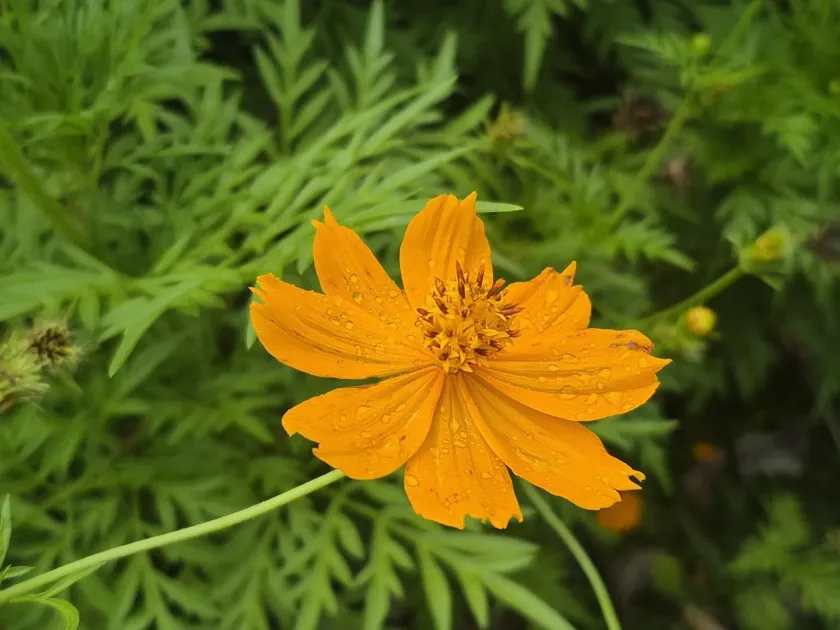
Description
Sowing dates
Sulfur cosmos (Cosmos sulphureus) is a heat-loving annual plant belonging to the Asteraceae family. Seeds are typically sown directly into the soil after the last frost date in late spring.
For regions with shorter growing seasons, starting seeds indoors is recommended. Sowing should occur 4 to 6 weeks before the final frost date in a well-draining potting mix.
Germination usually takes about 10 to 14 days when the soil temperature is kept around 20 degrees Celsius. Seedlings need bright light immediately after emerging to prevent etiolation.
When transplanting into the field, ensure a spacing of 30 to 45 centimeters between plants. This allows for adequate airflow and promotes better bloom production.
Direct seeding requires shallow planting, as the seeds need light to germinate efficiently. Keep the seedbed moist until the plants are well-established.
Growing requirements
This crop thrives in full sun exposure. While it can tolerate partial shade, maximum sunlight is required to achieve the most vibrant flower colors and dense growth.
Cosmos is highly adaptable to various soil types but performs best in poor to moderately fertile, well-draining soil. High nitrogen levels should be avoided.
Native to Mexico and Central America, the plant is remarkably drought-tolerant once established. It requires consistent irrigation only during the early growth stages.
The plant performs well in a wide range of temperatures, provided there is no frost. It is a classic choice for hot, dry summer environments.
Regular maintenance includes removing spent blooms, which encourages the plant to continue producing flowers throughout the entire season.
Main diseases and pests
Aphids are the most common pests for sulfur cosmos, often clustering on the tender new growth and flower buds, causing potential stunting.
Spider mites may become a problem during periods of intense heat and dry weather, resulting in mottled or discolored leaves that eventually drop.
Powdery mildew is a common fungal threat that appears as a white, dusty film on the leaves, usually triggered by high humidity and poor air circulation.
Gray mold (Botrytis) can affect plants during prolonged wet conditions. Providing adequate spacing between plants is the best preventative strategy.
Slugs and snails can be highly destructive to young seedlings, making manual removal or the use of organic barriers necessary in some gardens.