
Purple cosmos
Cosmos purpureus (DC.) Benth. & Hook. f. ex Hemsl.
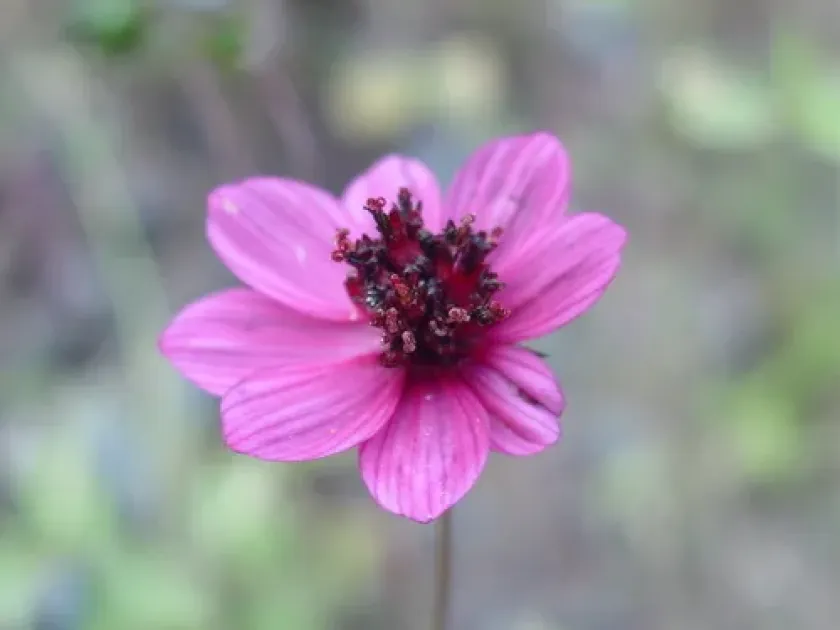
Description
Sowing dates
Seeds of Cosmos purpureus should be sown in open ground during late spring once the danger of frost has passed and the soil has warmed sufficiently.
For earlier flower production, a seed-starting method is recommended, planting indoors about four to six weeks before the expected last frost date.
The seeds require light to germinate, so they should only be lightly pressed into the soil surface rather than buried deep beneath the earth.
Proper spacing is critical for this species; plants should be kept at least 30-40 centimeters apart to ensure adequate air circulation and growth.
Seedlings usually emerge within two weeks when maintained in a warm, bright environment with consistent, moderate moisture levels.
Growing requirements
Purple cosmos is a member of the Asteraceae family, thriving in full sun locations where it receives at least six to eight hours of direct light daily.
The plant prefers well-drained, sandy-loam soils with moderate fertility; it does not perform well in waterlogged or overly compacted ground.
This species is highly adaptable and displays significant tolerance to drought once the root system is firmly established in the soil.
Maintenance of this crop involves deadheading spent flowers to encourage continuous blooming throughout the vegetative season.
Minimal fertilization is required as excessive nutrients often lead to lush foliage but poor flowering performance and weak stems.
Main diseases and pests
Aphids are the most common pests found on purple cosmos, often colonizing the tender tips of stems and flower buds during dry weather.
Powdery mildew may develop during periods of high humidity or poor airflow, appearing as a white, dusty fungal growth on the leaves.
Snails and slugs can be particularly destructive to young, tender sprouts, often necessitating protective measures during the early growth stage.
Root rot can occur if the plant is grown in heavy soil with poor drainage, typically indicated by yellowing leaves and general wilting.
To prevent disease outbreaks, gardeners should ensure proper spacing between plants and avoid overhead watering that keeps foliage wet for too long.