
Garden Cosmos
Cosmos bipinnatus Cav.
Description
Sowing dates
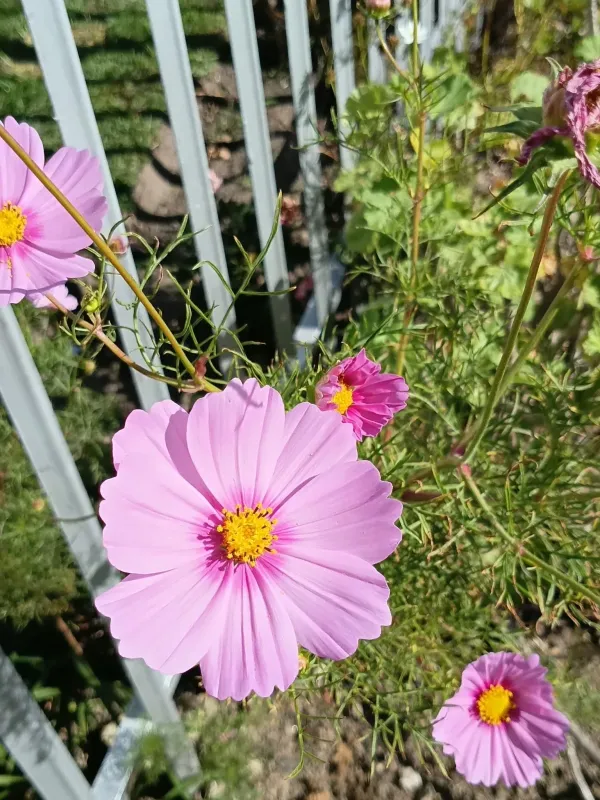
Garden cosmos Cosmos bipinnatus, a member of the Asteraceae family, is an annual herbaceous plant widely grown for its delicate flowers and feathery foliage.
Direct seeding in the garden should be done after the danger of frost has passed, usually in spring when the soil has warmed up sufficiently.
For earlier flowering, seeds can be started indoors in seed trays about 4-6 weeks before the last expected frost date in your region.
Sow seeds shallowly, covering them with no more than 1 centimeter of soil, as light is required for successful germination of some varieties.
Thinning is necessary once seedlings reach 5-10 centimeters in height, ensuring a spacing of 30-45 centimeters to promote healthy plant development and air circulation.
Growing requirements
This plant thrives in full sun, requiring at least 6 to 8 hours of direct sunlight daily to produce abundant flowers throughout the season.
Garden cosmos is highly adaptable and can grow in a variety of soil types, but it prefers well-drained, average to poor soil with neutral pH.
Avoid planting in soil that is too rich in organic matter or fertilizer, as this results in tall, lanky plants with minimal flower production.
It is exceptionally drought-tolerant once established, making it an excellent choice for low-maintenance landscaping and xeriscaping projects.
Regular watering is beneficial during the initial growth phase, but mature plants require supplemental irrigation only during prolonged dry spells.
Main diseases and pests
Aphids are the most common pests affecting cosmos, typically clustering on new growth and flower buds, which can stunt the plant's development.
Powdery mildew may appear on leaves during periods of high humidity and poor air circulation, appearing as a white, dusty fungal growth.
Slugs and snails can cause significant damage to young seedlings; implementing physical barriers or organic bait is recommended in prone areas.
To minimize disease pressure, maintain proper spacing between plants and remove any infested plant debris promptly to prevent the spread of pathogens.
In cases of severe infestation, use environmentally friendly insecticidal soaps or targeted biological controls to manage populations without harming pollinators.
Harvesting
Seed harvesting should be performed when the flower heads have faded and the seeds have turned dark brown or black in color.
It is important to harvest before the seeds dry out completely and fall from the flower head, as cosmos is known for prolific self-seeding.
Once collected, spread the seeds out in a cool, dry area to ensure complete desiccation before packing them for long-term storage.
Store seeds in breathable paper bags in a cool, dark location to maintain viability, as seeds can remain productive for up to three years.
Beyond its ornamental value, garden cosmos is frequently used as a companion plant to attract bees, butterflies, and beneficial predatory insects to vegetable gardens.