
Corema album
Corema album
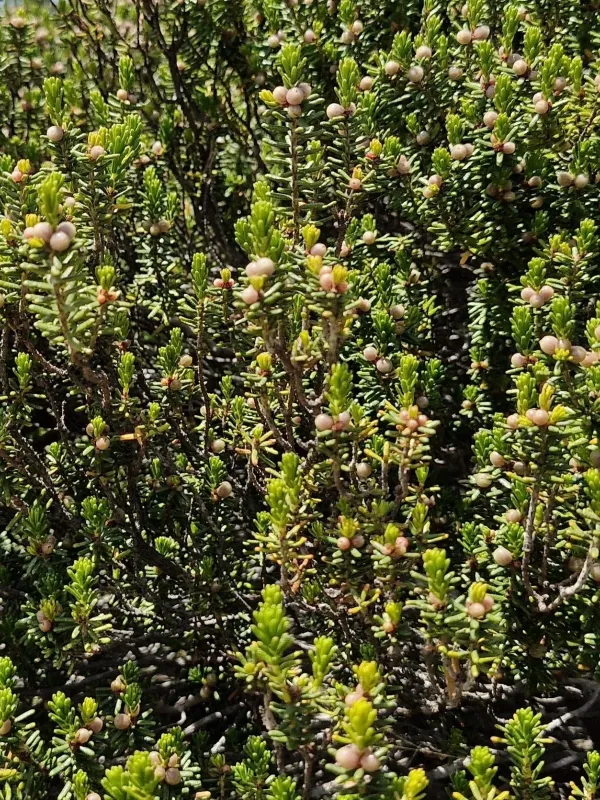
Description
Growing requirements
Corema album, commonly known as the white crowberry or Portuguese crowberry, is an evergreen shrub belonging to the Ericaceae family. It is native to the Atlantic coastal regions of the Iberian Peninsula, where it thrives in sandy soil conditions.
The plant is highly specialized to grow in coastal sand dunes. It requires a sunny, open location and a well-drained, acidic soil environment. The species is well-known for its ability to withstand salt spray and wind, making it an excellent choice for coastal landscape stabilization.
Botanically, Corema album is dioecious, meaning male and female flowers are borne on separate plants. To ensure fruit production, growers must ensure a sufficient number of male pollinators are present in the vicinity of female plants.
Growth is typically slow, resulting in a dense and compact habit. The foliage is needle-like and dark green, which provides significant aesthetic value throughout the year, even when the plant is not in fruit.
Temperature requirements are moderate, as the species is sensitive to extreme hard freezes. It is best suited for climates similar to the Mediterranean or temperate coastal zones where seasonal temperature fluctuations remain relatively stable.
Yield
The fruit of Corema album is a small, round, white or pale pink berry. The harvest period usually occurs in the late summer months, when the berries reach full maturity and peak flavor profiles.
While not a staple agricultural crop, the berries have been traditionally consumed in their native regions. They possess a distinctively refreshing, juicy, and slightly acidic taste that is valued by foragers and local enthusiasts.
The yield per plant is moderate and dependent on plant maturity and sunlight exposure. Because the fruit is delicate and has a short shelf life, it is rarely seen in international markets, making it a specialty crop for local consumption.
Proper pollination is the primary driver of fruit set. Maintaining a balanced ratio of male to female plants in a plantation or garden setting is the most critical agronomic step to maximize harvest potential.
Future agricultural prospects for this species may involve niche markets for unique, wild-tasting fruits, provided that cultivation methods focus on sustainable, sandy-soil management practices.
Main diseases and pests
The most significant threat to Corema album is the development of root-borne fungal pathogens. Because the plant naturally grows in well-drained sand, any accumulation of water in the root zone quickly promotes decay.
Pests such as spider mites may become problematic during dry, warm spells. These pests damage the foliage and can weaken the plant's overall vitality, making it more susceptible to environmental stressors.
Inappropriate soil chemistry, particularly neutral or alkaline pH levels, leads to chlorosis. This condition inhibits the plant's ability to photosynthesize effectively, resulting in stunted growth and leaf drop.
Competition from fast-growing weeds can easily overwhelm young plants. Since the root system of Corema is relatively sensitive, chemical weed control must be used with extreme caution to avoid damaging the shrub.
Disease prevention relies heavily on maintaining proper spacing and airflow between plants. Ensuring that the site remains dry and well-aerated is the best strategy for maintaining a long-lived and healthy crop.