
Mirror bush
Coprosma repens A. Rich.
Description
Growing requirements
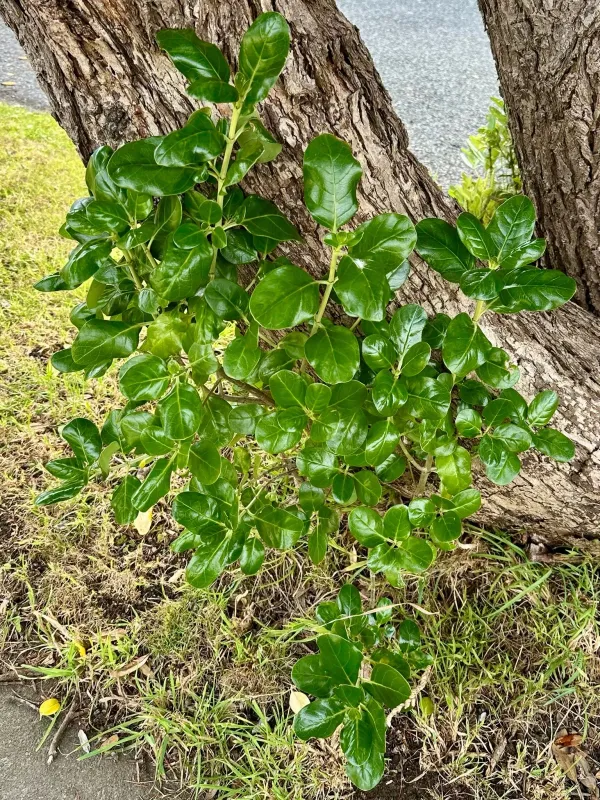
Mirror bush (Coprosma repens) is an evergreen shrub belonging to the Rubiaceae family. Native to New Zealand, this species is well-known for its glossy, leathery leaves that reflect light, which earned the plant its common name. It naturally grows in coastal areas, showing high tolerance to wind and salt spray.
The plant thrives in full sun, which is essential to maintain the vibrant colors of its foliage, especially in variegated cultivars. While it can survive in partial shade, the growth pattern becomes less compact, and the plant might lose its typical dense habit.
Soil requirements for Coprosma repens center on drainage. It performs best in sandy, well-draining soils and is quite intolerant of waterlogged conditions. In garden settings, it is often used as a hedge or a screening plant due to its ability to be pruned into tight shapes.
This species is not frost-hardy and is typically grown outdoors only in temperate or maritime climates. In colder regions, it is popular as a potted plant that must be moved indoors or to a frost-free area during the winter months to avoid damage from sub-zero temperatures.
Basic maintenance includes consistent watering during the growing season and periodic shaping. Fertilizing with a balanced liquid feed during spring promotes lush growth and supports the development of the characteristic shiny, waxy leaf cuticle that protects the plant.
Main diseases and pests
Common pests that affect the Mirror bush include scale insects and mealybugs. These sap-sucking insects often congregate on the undersides of leaves or along the stems, causing stunted growth and potentially facilitating the development of sooty mold on the foliage.
Root rot is a primary concern for the plant, typically triggered by poor drainage or excessive irrigation. The symptoms include yellowing leaves and sudden wilting, which usually indicates that the root system has failed due to fungal pathogens in saturated soil.
Spider mites can be a problematic pest, especially when the plant is kept in indoor environments with low humidity. They spin fine webbing and cause the foliage to develop a stippled, pale appearance before the leaves eventually drop off.
Powdery mildew may occur if the plant is grown in areas with poor airflow and high humidity. It manifests as a white, dusty fungal growth on the leaf surfaces, which can be managed by improving circulation and applying appropriate fungicides.
To keep the plant healthy, regular monitoring for signs of infestation is crucial. Maintaining a clean growing environment and ensuring the plant is not overwatered will significantly reduce the risk of both pest attacks and fungal complications.