
Coprosma propinqua
Coprosma propinqua A. Cunn.
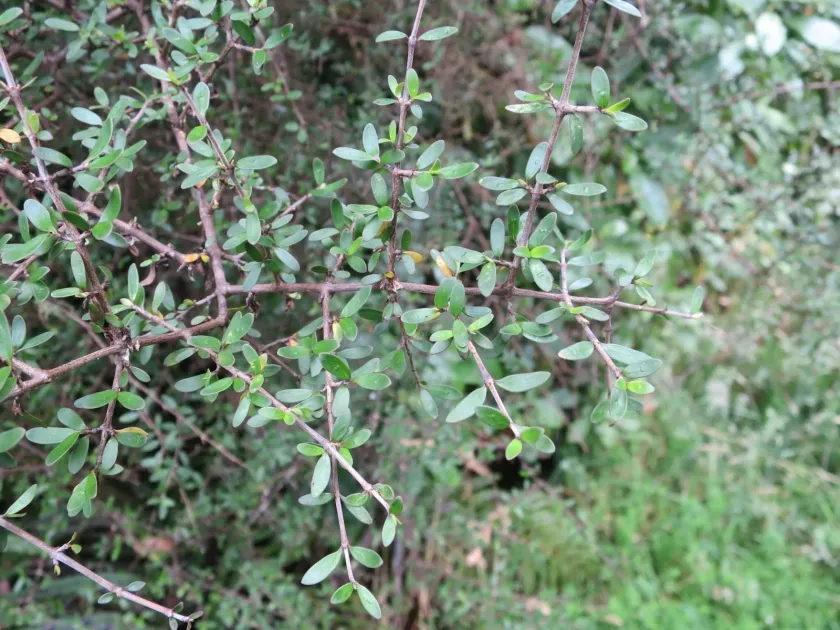
Description
Growing requirements
Coprosma propinqua is a robust, evergreen shrub belonging to the Rubiaceae family. Native to New Zealand, it is widely recognized for its adaptability to various environments, ranging from coastal areas to inland scrublands.
The plant demonstrates significant physiological flexibility. It thrives in full sun or partial shade and is highly tolerant of exposure to strong winds, including salt-laden coastal winds that would typically damage other plant species.
Regarding soil requirements, the species is undemanding and thrives in well-drained, nutrient-poor, or rocky soils. It maintains healthy growth across a spectrum of soil textures, though it performs optimally in soils with a near-neutral pH balance.
Agricultural management involves basic pruning to maintain dense form, especially when grown as a hedge. While it is naturally drought-tolerant once established, supplemental irrigation is beneficial during the initial planting stages.
The economic value of this crop lies in its utility as a windbreak, a soil stabilizer for erosion control, and a significant component in ecosystem restoration projects due to its resilience to harsh conditions.
Main diseases and pests
The primary health threats to the plant include various fungal pathogens that can develop under conditions of poor air circulation and excessive humidity, often manifesting as leaf spot diseases.
Insect pests, specifically scale insects and mealybugs, are frequent offenders. These pests attach themselves to the undersides of leaves and stems, sucking the sap and weakening the overall vigor of the shrub.
Root rot is a critical threat that usually stems from poor drainage or persistent waterlogging. If the soil remains saturated, the roots become susceptible to oomycetes, which can cause rapid decline.
Aphid infestations may occur in early spring during the flush of new growth, requiring careful monitoring and potential application of horticultural oils to mitigate the impact.
Integrated pest management strategies for this culture emphasize the importance of keeping the plant canopy thinned for ventilation and avoiding overhead irrigation in enclosed, humid spaces.