
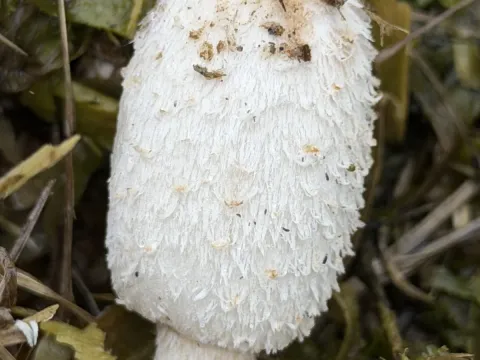
Shaggy mane
Coprinus
Shaggy mane (Coprinus comatus) is a saprotrophic fungus belonging to the Agaricaceae family, currently gaining interest as a viable crop for professional mushroom growers.
What the section contains

Shaggy mane
The cultivation process begins with preparing a nutrient-rich substrate, typically based on straw, manure, and mineral additives, which is pasteurized to eliminate competition.
Inoculation is performed using grain-based spawn, ensuring strict sterile conditions to allow the mycelium to establish itself in the substrate effectively.
During the colonization phase, the substrate is maintained at temperatures between 20 and 24 degrees Celsius in dark, controlled environments.
Once the mycelium has fully colonized the substrate, a casing layer consisting of a peat-chalk mixture is applied to initiate the fructification process.
Successful cultivation of shaggy mane requires high humidity levels, consistently maintained between 80 and 90 percent within the growing room.
Temperature control is crucial; it must be lowered to 16–18 degrees Celsius after the casing layer is applied to stimulate the development of mushroom pins.
Proper aeration is essential, as the shaggy mane is sensitive to carbon dioxide accumulation, which can cause elongated, distorted stalks.
Light requirements are minimal, but diffuse ambient light helps in shaping the development of the fruit bodies during the mature stages.
The pH balance of the casing layer should be kept neutral or slightly alkaline to facilitate the optimal interaction between the mycelium and the surface.
The yield of Coprinus comatus is highly dependent on the quality of the substrate and the precision of the microclimate management within the growing facility.
Commercial growers can expect a yield of approximately 15 to 25 percent of the wet weight of the substrate over a production cycle of several waves.
The fungus produces multiple flushes, with intervals of about 10 to 14 days between each, allowing for a steady supply of produce during the harvesting season.
Supplementing the substrate with organic nitrogen sources can significantly increase the individual weight and density of the mushrooms produced.
Consistent monitoring and adjusting of humidity and water levels during the resting phase between flushes are critical for sustaining high production levels.
The primary threat to shaggy mane cultivation is the colonization of the substrate by competing molds, particularly Trichoderma species, which can thrive in high-humidity conditions.
Fungus gnats and sciarid flies are common pests that can damage the developing mushrooms, compromising both yield quantity and visual quality.
Bacterial blotch may occur if ventilation is inadequate, resulting in unsightly spots on the caps and reducing the shelf life of the harvested crop.
Maintaining strict hygiene protocols in the cultivation environment is necessary to prevent the buildup of pathogens and spores that cause crop failure.
Overwatering can lead to the development of cobweb mold, which creates a visible film that suffocates the mycelium and hinders growth.
Harvesting shaggy mane requires precision and speed due to the mushroom's natural process of deliquescence, where the cap turns into a black liquid.
Mushrooms must be harvested when the cap is still tight against the stem and the gills underneath are white, indicating peak freshness.
The harvest method involves twisting the mushroom from the base, ensuring no debris is left behind to prevent rotting in the substrate.
Post-harvest handling is critical, requiring immediate cooling to 0–2 degrees Celsius to slow down enzymatic activity and preserve quality.
Due to the extremely short shelf life, quick distribution chains or immediate processing methods are necessary for successful commercialization.