
Sharp couch grass
Agropyron acutum
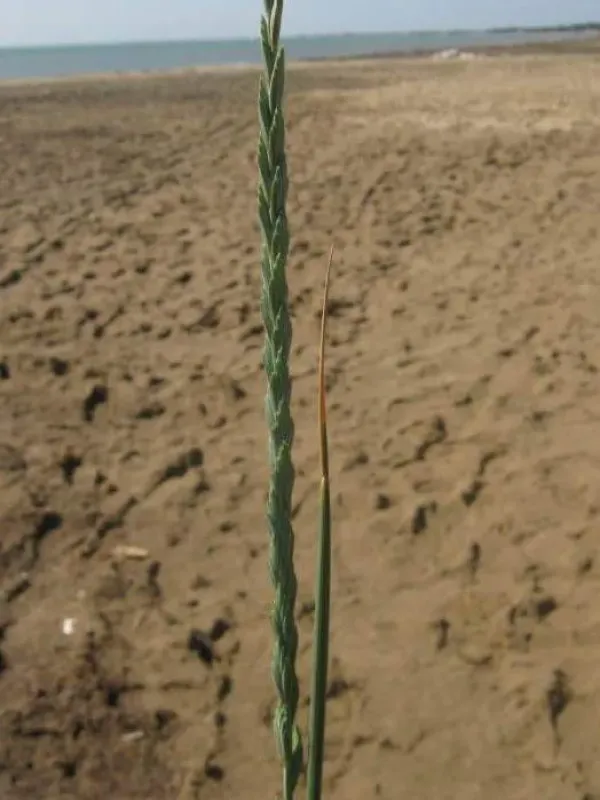
Description
Sowing dates
Sowing of sharp couch grass is recommended in early spring, once the soil has warmed to at least 5-8 degrees Celsius, or in the early autumn to allow root establishment before winter.
The optimal planting depth is 2-3 centimeters in heavy soils and up to 4 centimeters in lighter sandy soils to ensure consistent germination and seedling emergence.
The seeding rate averages 10-15 kilograms per hectare when using standard row planting, which helps establish a dense and uniform stand for grazing or hay production.
This crop is characterized by high initial growth rates, which allows it to suppress weeds effectively during the establishment phase while forming a strong root network.
The first few weeks after sowing are critical for root development, so in arid regions, light irrigation should be provided to maintain moisture in the upper soil layer.
Growing requirements
Sharp couch grass is a member of the Poaceae family, known for its high ecological plasticity, allowing it to adapt successfully to various environmental conditions.
While it prefers moderately moist soils, the plant exhibits significant drought tolerance and salt tolerance due to its deep and aggressive root system in semi-arid areas.
The crop performs best in fertile soils, but it is capable of producing acceptable yields in saline or sandy lands where other common grass species might struggle to survive.
Regarding light requirements, the grass prefers open and sunny areas to optimize tillering and the accumulation of high-quality vegetative biomass.
- High cold hardiness during winter months.
- Resilience to temporary soil waterlogging.
- Strong tolerance to high salinity levels in soil solutions.
Yield
Productivity under intensive cultivation allows for yields ranging from 30 to 50 quintals of hay per hectare, especially when nitrogen fertilization is applied regularly.
In pasture settings, green mass yield depends on grazing frequency; however, sharp couch grass demonstrates an excellent ability to recover quickly after being grazed.
Peak yield performance is typically observed in the second and third years after planting, once the plants have established a full sod layer and root system.
To maintain high productivity of perennial stands, it is recommended to apply mineral fertilizers in early spring to stimulate vigorous vegetative development.
The overall agricultural efficiency of the crop is increased when used in mixtures with legumes, which enhances the nutritional value of the livestock feed.
Main diseases and pests
Sharp couch grass possesses strong natural immunity, but improper agricultural practices can lead to rust outbreaks, which appear as brown spots on the leaf surfaces.
In high-humidity conditions with overly dense stands, powdery mildew can develop, negatively affecting the plant's photosynthetic capacity and overall dry matter.
Among pests, grain flies and cereal bugs pose the greatest danger, as they often target young shoots during the most active growth phases of the plant.
To prevent pest spread, it is recommended to maintain optimal seeding rates and avoid overcrowding, which creates a favorable microclimate for insect reproduction.
Integrated pest management includes both preventative agricultural techniques and the timely application of authorized fungicides when economic thresholds are exceeded.
Harvesting
The best time to harvest for hay is during the booting or early heading stage, when the plant contains the highest concentration of proteins and minerals.
Delaying the harvest results in stem lignification, significantly reducing feed palatability for livestock and leading to a loss in nutritional value.
Seed harvesting is carried out when the panicles are fully mature and the seeds exhibit the characteristic color and hardness, taking care to minimize shattering loss.
Harvesting technology involves mowing followed by tedding to ensure uniform drying of the swath, which is essential for preserving the quality of the harvested hay.
After the harvesting process, it is vital to ensure proper storage of the hay in a dry and well-ventilated area to prevent self-heating and mold growth.