
Hare's-ear mustard
Conringia orientalis
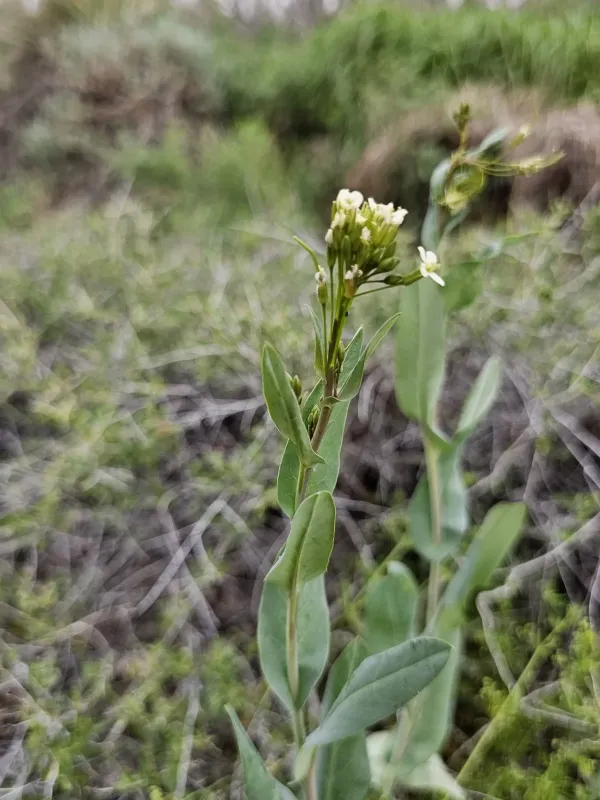
Description
Sowing dates
Hare's-ear mustard (Conringia orientalis) is a member of the Brassicaceae family, typically acting as a winter annual in its natural habitats. Sowing usually occurs in late autumn, allowing the seedlings to establish a rosette before the onset of winter dormancy.
When cultivated for specific purposes, spring sowing is also possible in regions with sufficient moisture. Seeds are typically sown at a depth of 1 to 2 centimeters to ensure adequate contact with the soil while allowing for emergence without excessive energy expenditure.
The spacing between rows is determined by the intended use of the crop. Standard agricultural equipment allows for precision seeding, ensuring that each plant has enough space to develop its full vegetative potential during the growing season.
Germination is generally robust, provided that the soil temperature has reached at least 5 to 7 degrees Celsius. Early growth is focused on rosette formation, which provides the plant with the necessary structural foundation for later stem elongation.
Proper soil preparation, including light harrowing before planting, is recommended to create a fine seedbed. This helps to retain moisture in the surface layers, which is crucial for the uniform and fast emergence of the seedlings.
Growing requirements
This species thrives in a wide range of soil types, but it prefers well-drained loamy or clay-loam soils. It performs best in nutrient-rich environments where organic matter is readily available for rapid growth.
Conringia orientalis is a sun-loving plant that requires high light intensity for optimal photosynthesis. Shaded areas significantly inhibit its growth and lead to reduced seed set, which is why open field sites are ideal.
Regarding climate, the plant exhibits remarkable cold tolerance. It is well-adapted to continental climates where it can survive freezing winter conditions, provided there is sufficient snow cover to protect the growing crown.
Water availability is critical during the bolting and flowering phases. While the plant can tolerate moderate drought, prolonged water stress will result in shorter stems and smaller seed pods, negatively impacting the total biomass.
The optimal pH range for this crop is neutral to slightly alkaline. Acidic soils can restrict nutrient uptake, so amending the field with lime may be beneficial if the soil analysis indicates a low pH level.
Main diseases and pests
Crucifer flea beetles are the most significant early-stage pests. They feed on the cotyledons and young leaves, potentially causing severe stand reduction if not managed through proper monitoring or seed treatments.
The rape blossom beetle is another major threat during the reproductive phase. Adults and larvae feed on the floral parts, which can lead to flower abortion and significantly reduce the final seed yield of the crop.
Fungal diseases such as downy mildew and white rust often affect the plants during periods of high humidity. These diseases appear as lesions on the leaves and can spread rapidly if the air circulation within the canopy is poor.
Alternaria leaf spot can also cause damage to the stems and siliques. This disease leads to premature pod senescence and seed shattering, making the harvest process more difficult and decreasing the overall quality of the seeds.
Effective management strategies should focus on integrated pest and disease control, including crop rotation with non-brassica crops and the use of targeted protection products to maintain plant health throughout the season.