
Conicosia elongata
Conicosia elongata
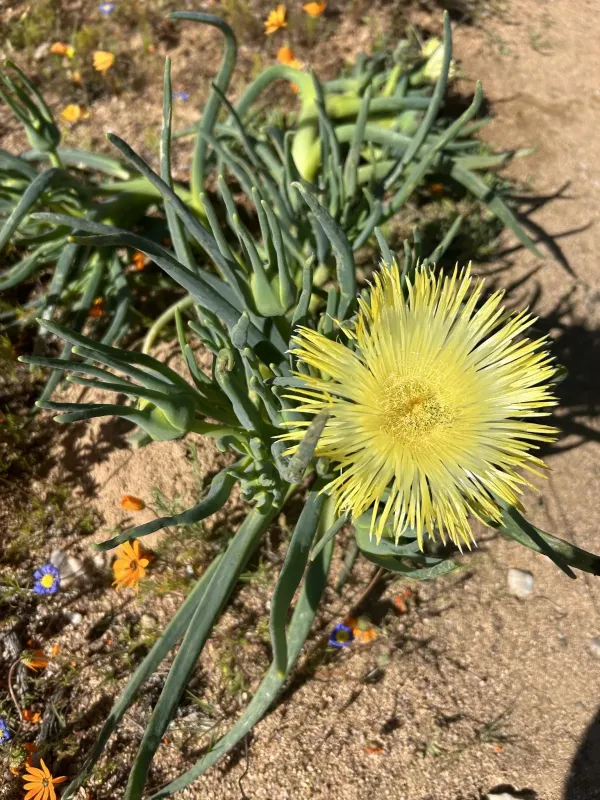
Description
Growing requirements
Conicosia elongata is a succulent species belonging to the Aizoaceae family. It is a perennial herbaceous plant recognized for its ability to thrive in arid environments through water storage in its fleshy leaves.
The species originates from the semi-arid and coastal regions of South Africa. It has evolved to survive in nutrient-poor, sandy, or rocky soils, demonstrating remarkable resilience to harsh environmental factors.
The primary requirement for growth is direct and intense sunlight. Insufficient light exposure will result in etiolation, where the plant develops weak, elongated stems that significantly reduce its natural vigor and decorative quality.
The soil must have excellent drainage capabilities. Waterlogging is the primary cause of plant failure, which is why gritty, sandy, or porous substrates are essential for maintaining the root system's health.
In terms of agricultural adaptability, this plant excels in conditions where standard crops fail, particularly in regions with high salt content in the soil or limited availability of irrigation water.
Main diseases and pests
The most critical threat to Conicosia elongata is root rot, triggered by overwatering or soil that fails to drain quickly. Once rot sets in, the fleshy tissues decay rapidly, and the plant becomes unsalvageable.
Mealybugs are the most common pests found on this species. They typically colonize the base of the leaves and the crevices of the stem, weakening the plant by extracting its nutrient-rich sap.
Spider mites may manifest during periods of extreme heat and low air humidity, particularly if the plant is grown in confined environments with poor airflow, causing yellowing and tissue damage.
Fungal pathogens such as Pythium and Phytophthora represent a significant risk. These pathogens thrive in stagnant, humid conditions, highlighting the need for adequate air circulation and precise moisture control.
Effective pest and disease management relies on cultural controls: providing sufficient space between plants, ensuring a strict dry-down period between waterings, and avoiding wetting the foliage directly during maintenance.