
St. Helena gumwood
Commidendrum robustum
Description
Growing requirements
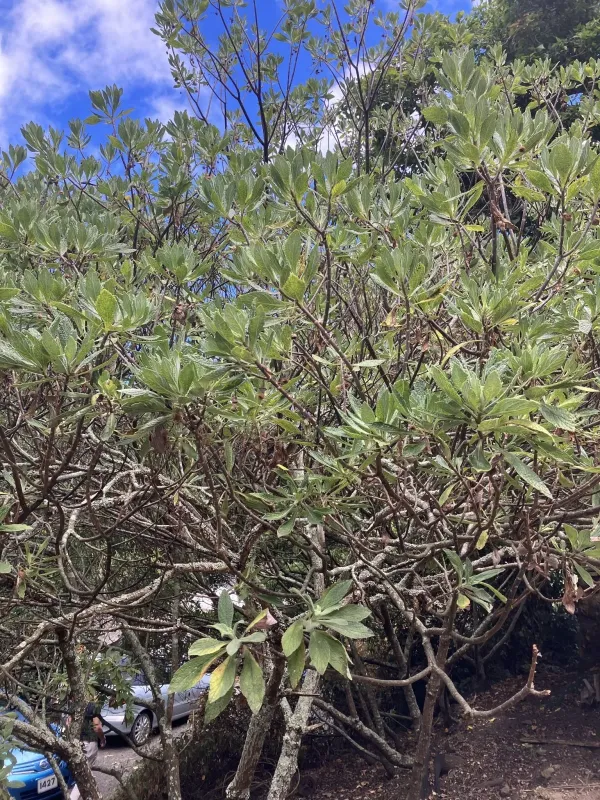
The St. Helena gumwood (Commidendrum robustum) is a distinctively branched, woody member of the Asteraceae family. As an endemic species to St. Helena, it has evolved to thrive in rugged, volcanic terrain.
Successful cultivation requires a substrate that mimics its native volcanic, well-draining soil. Providing a mix of coarse grit and mineral-rich sand is essential to prevent waterlogging and root asphyxiation.
The species requires a position with good air circulation, simulating the constant oceanic breezes of its native habitat. Stagnant air conditions are detrimental and often lead to foliage decline.
While adapted to harsh rocky environments, the plant is sensitive to frost. In professional horticultural settings, it must be protected from temperatures dropping below 10 degrees Celsius.
Watering requirements are low compared to standard woody crops. A distinct dry season is beneficial, and irrigation should only be applied when the growing medium has thoroughly dried out.
Main diseases and pests
The primary agricultural challenge for this species is the susceptibility to various fungal pathogens that thrive in humid environments.
Invasive sap-sucking insects pose a significant risk, as they weaken the plant by draining nutrients from the tender stems.
Poor soil drainage leads to immediate development of anaerobic bacteria around the roots, causing sudden collapse of the plant.
Herbivory by introduced fauna remains a constant threat, necessitating physical protection for younger specimens during the establishment phase.
Environmental instability, particularly shifts in rainfall patterns, can disrupt the plant's natural dormant cycles, making it more prone to disease outbreaks.