
Cola nut
Cola acuminata (P. Beauv.) Schott & Endl.
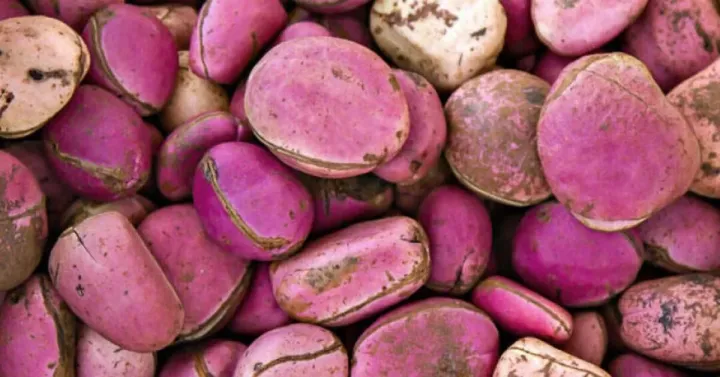
Description
Sowing dates
Propagation of Cola acuminata is primarily achieved through seeds, which exhibit recalcitrant behavior and lose viability rapidly. Consequently, seeds should be sown immediately after extraction from the fruit to ensure successful germination.
Seeds are planted in a loose, well-draining substrate at a depth of 2-3 cm. Maintaining high humidity and consistent temperatures between 25°C and 30°C is critical for the initial development of the radicle and shoot.
In nursery settings, containers are preferred to allow for optimal root development before field transplantation. Seedlings are typically ready for planting once they reach a height of 40-50 cm, usually after 12-18 months of care.
Field spacing is vital for long-term productivity; trees should be planted at intervals of at least 6-8 meters. This ensures sufficient space for the spreading crown and prevents excessive competition for nutrients.
Young trees require shade during their establishment phase. Planting them alongside taller, faster-growing species is a common practice to protect them from direct, scorching sun during the first few years.
Growing requirements
Cola acuminata is a member of the Malvaceae family (subfamily Sterculioideae), native to the tropical rainforests of West Africa. It thrives in regions with warm temperatures throughout the year.
The crop requires a stable, high rainfall climate, ideally between 1500 and 2500 mm annually. Prolonged dry spells significantly reduce fruit development and can lead to the loss of the entire harvest.
Deep, fertile, well-drained loam soils are ideal for the kola tree. The plant is highly intolerant of waterlogged conditions, which lead to root rot and premature tree mortality.
Regular fertilization with organic matter helps maintain soil fertility and supports the energetic demands of fruit production. Foliar analysis is recommended to monitor nutrient deficiencies in intensive cultivation.
Pruning is essential to maintain tree shape, manage height for easier harvesting, and ensure good airflow within the canopy to prevent the accumulation of moisture and fungal spores.
Yield
The kola tree begins to produce fruit relatively slowly, with the first harvest typically occurring 5 to 7 years after planting. The tree is long-lived and can remain productive for up to 70 years.
A mature tree can yield between 50 and 100 kg of kola nuts per season. Production often occurs in cycles, with some trees showing multiple flowering flushes throughout the year depending on climate.
Yield stability is heavily dependent on maintaining soil moisture levels and minimizing environmental stress. Effective weed management in the understory is necessary to prevent nutrient depletion.
The harvested nuts are valued for their high concentrations of caffeine and theobromine. They serve as a key raw material for the beverage industry and traditional pharmaceutical applications.
Quality control is crucial; the market prefers nuts that are properly fermented or dried to maintain their characteristic stimulating properties and to resist microbial contamination during storage.
Main diseases and pests
Anthracnose is a primary fungal threat to Cola acuminata, causing leaf spots, shoot dieback, and fruit damage. It thrives in high-humidity environments, necessitating good canopy management.
Root rot, driven by poor drainage or over-irrigation, is a lethal threat to the plantation. Preventive measures focus on selecting elevated planting sites and avoiding heavy clay soils.
Stem borers represent a major pest risk, as they tunnel into the trunk and branches. This damage disrupts nutrient transport and invites secondary infections by bacteria and fungi.
Leaf-eating insects can significantly reduce the photosynthetic area of the tree, leading to stunted growth and lower fruit yields if infestations are not addressed promptly.
- Implementing integrated pest management (IPM) strategies.
- Sanitary pruning to remove infected or dead branches.
- Monitoring for early signs of borer infestation.
Harvesting
Harvesting is a manual process requiring careful timing. Fruits are ready when the pods turn a brownish color and begin to show signs of splitting, indicating physiological maturity.
Harvesters use long-handled hooks or ladders to reach pods in the upper canopy. Great care must be taken not to damage the tree bark or adjacent flower buds, which are essential for future harvests.
After collection, the pods are split, and the fresh nuts are extracted. The pulp must be removed promptly to prevent fungal growth, which can ruin the batch before processing begins.
Drying is a critical step to preserve the nuts. They are typically kept in ventilated, shaded conditions and sometimes wrapped in specific leaves to control the moisture release, maintaining the nut's integrity.
Once dried, the nuts are graded by size and chemical quality. They are packed for transport to processing facilities, where they are converted into extracts for food and medicinal products.