
Coelorachis cylindrica
Coelorachis cylindrica
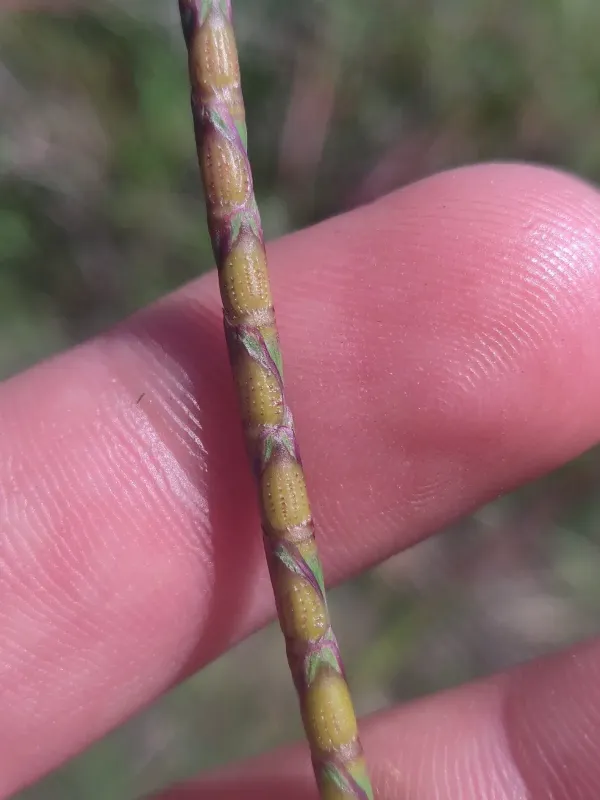
Description
Sowing dates
The planting of Coelorachis cylindrica is best executed during the spring season once soil temperatures have reached a stable level suitable for germination, typically above 15 degrees Celsius.
Preparation of the seedbed is critical; the soil must be fine-tilled to ensure that the small seeds have consistent contact with moist soil particles to support successful emergence.
Row spacing is generally recommended between 30 and 45 centimeters to provide adequate space for the development of individual clumps and to reduce competition between plants.
Seed depth should be kept shallow, specifically within the range of 1 to 2 centimeters, to allow the seedlings to penetrate the soil surface without exhausting their stored energy.
Post-planting compaction, using a light roller, is an effective agronomic practice to enhance the seed-to-soil contact and improve moisture uptake during the initial germination phase.
Growing requirements
Coelorachis cylindrica, belonging to the Poaceae family, is a warm-season perennial grass known for its physiological robustness and resilience in various environmental conditions.
This species thrives in full sun exposure and performs best on well-drained soils, ranging from sandy loams to clay soils, as long as waterlogging is avoided.
One of the primary advantages of this grass is its significant drought tolerance, which allows it to remain productive during periods when water availability is limited.
While it is adaptable to different soil types, the ideal pH level for optimum growth is generally considered to be in the slightly acidic to neutral range, between 6.0 and 7.5.
Temperature plays a crucial role in its development; the plant shows rapid biomass accumulation when temperatures range between 20 and 30 degrees Celsius during the growing season.
Main diseases and pests
Fungal diseases are the primary concern for this crop, especially in humid environments where stagnant air and high moisture levels promote pathogen reproduction.
Rust diseases can impact leaf health, leading to decreased forage quality and yield if left unmanaged during the peak development phases of the plant.
Insect pests, including various cereal-feeding insects and mites, can occasionally cause damage by feeding on the sap of stems and leaves, weakening the overall plant structure.
Effective management strategies involve regular field scouting to identify early signs of infestation or disease, followed by appropriate cultural or chemical control measures.
- Ensuring adequate spacing for air circulation.
- Managing soil moisture levels to avoid saturation.
- Removing crop residues to prevent overwintering of pathogens.