
Cnestis corniculata
Cnestis corniculata
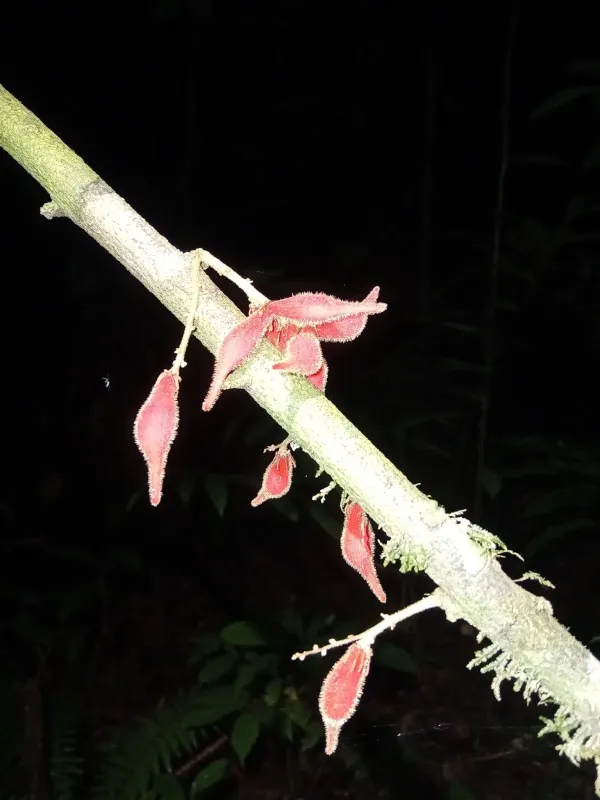
Description
Growing requirements
Cnestis corniculata is a woody vine belonging to the Connaraceae family. This perennial plant is native to the tropical rainforests of West and Central Africa, where it plays an integral role in the forest ecosystem.
The plant thrives in humid tropical environments with high annual temperatures and consistent air moisture. It performs best in fertile, well-drained loamy soils rich in organic matter, characteristic of the rainforest floor.
In terms of cultivation, the species requires protection from direct sunlight during early development, preferring the partial shade provided by the forest canopy. Its root system is highly adaptable to the competition for nutrients found in tropical forest soils.
Botanically, the plant is identified by its alternate compound leaves and small flowers arranged in clusters. Its fruits possess a distinct horn-like shape, which inspired its specific epithet, and contain seeds with a prominent aril.
Economic and agricultural interest in Cnestis corniculata is primarily focused on ethnomedicine. Various parts of the plant, including the bark and roots, are utilized by indigenous communities to create extracts known for their antimicrobial and anti-inflammatory properties.
Main diseases and pests
The primary threats to wild populations involve habitat loss due to deforestation and land-use changes. As this is not a mass-produced agricultural commodity, specific pests for this species have not been extensively categorized in commercial agricultural literature.
In its natural habitat, the plant may suffer from fungal infections common to humid tropical environments, especially during prolonged rainy seasons, which can cause significant damage to the leaf tissue.
Leaf-eating insects and various phytophagous organisms native to the West African region may occasionally feed on young vine shoots, thereby hindering vegetative growth and vitality.
Root rot represents a significant risk if water stagnation occurs, particularly if the soil lacks adequate drainage or if the plant is established in low-lying, waterlogged terrain.
Ongoing monitoring of potential pathogens is essential, especially when introducing the plant into agroforestry systems, to prevent the transmission of diseases from adjacent agricultural crops.