
Clowesia warczewitzii
Clowesia warczewitzii
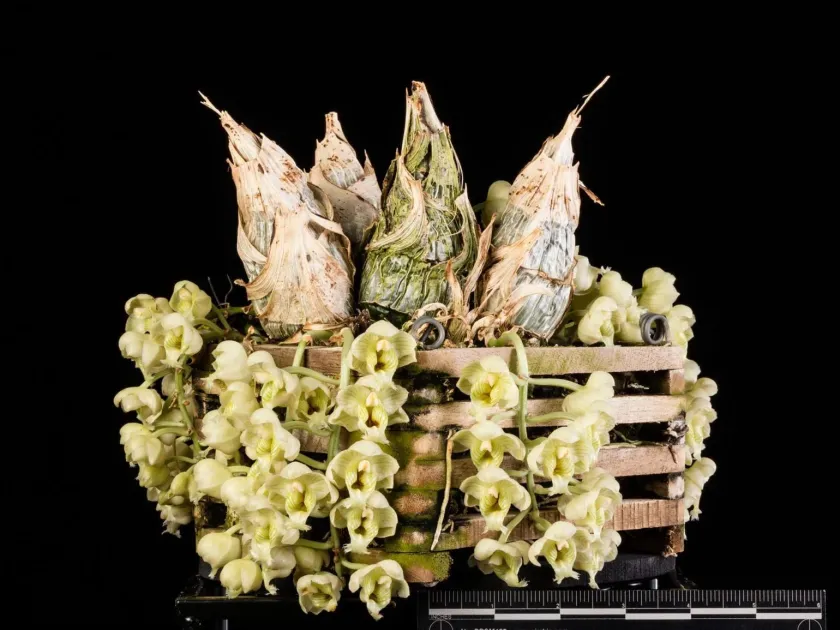
Description
Growing requirements
Clowesia warczewitzii belongs to the Orchidaceae family. It is an epiphytic species native to the tropical rainforests of Central and South America, particularly in regions like Panama, Costa Rica, and Colombia, where it thrives on high tree branches.
The plant requires bright, filtered light to perform photosynthesis without causing leaf burn. Direct sunlight is harmful to this species, as it is accustomed to the shaded canopy of its native environment, making a bright room with indirect exposure ideal.
For potting, a coarse, well-draining orchid mix is essential. A combination of pine bark, charcoal, and perlite provides the necessary airflow for the roots. It is crucial to prevent the medium from becoming waterlogged, which mimics the natural drainage experienced by epiphytes.
Temperature management is key for success; the plant prefers warm conditions during the growing season, typically between 20 and 27 degrees Celsius. It is sensitive to cold drafts and sudden changes in the environment, which can cause premature leaf drop.
The dormancy period is a biological necessity for Clowesia warczewitzii. Once the leaves naturally turn yellow and drop, the plant requires a dry, cooler environment with minimal to no water until new growth or flower spikes emerge, signaling the start of the next cycle.
Main diseases and pests
Common pests that infest this orchid include spider mites and scale insects. These pests thrive in dry conditions and can quickly weaken the plant by feeding on its sap, leading to stunted growth or the transmission of viral diseases.
Root rot is the most common physiological disorder caused by overwatering or using an improperly aged, decomposed substrate. The roots are highly oxygen-dependent, and suffocation in wet media leads to rapid decay of the pseudobulbs.
Fungal infections can manifest as black spots on the leaves or pseudobulbs during high-humidity seasons. To mitigate these risks, one should ensure high air circulation and avoid wetting the plant's crown during watering sessions.
Bacterial soft rot can spread quickly if water is trapped in the center of the plant or around the base of the pseudobulbs. If detected, affected areas should be excised with a sterile blade, and the plant should be treated with a systemic fungicide.
Regular maintenance, including removing debris from the pot surface and ensuring the potting container has sufficient drainage holes, is the best strategy for preventing these threats and ensuring the longevity of the plant.