
Climacoptera crassa
Climacoptera crassa
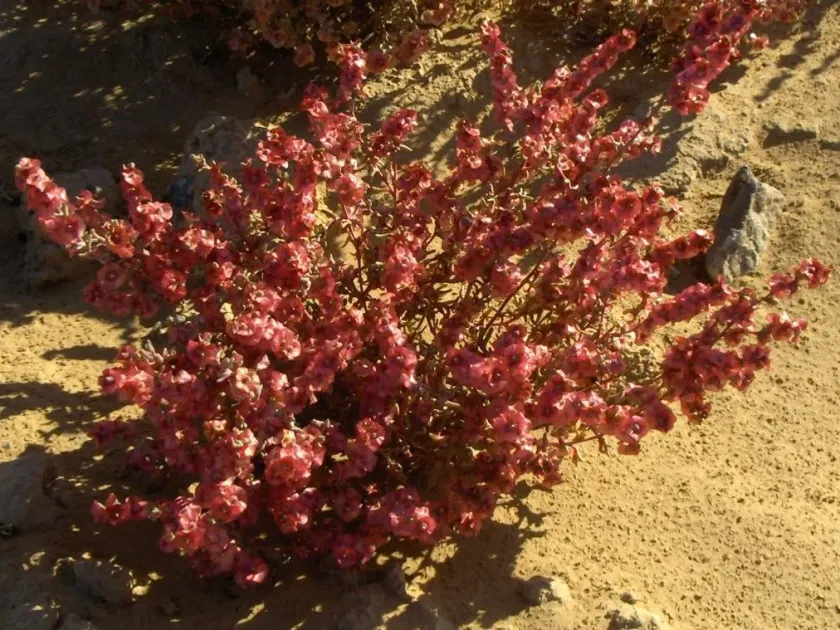
Description
Growing requirements
Climacoptera crassa belongs to the Amaranthaceae family and is recognized as a significant halophyte species. It is well-adapted to thrive in desert and semi-desert environments characterized by high soil salinity.
The plant exhibits exceptional tolerance to osmotic stress, allowing it to grow on salt flats and solonchaks where conventional crop species would fail due to salt toxicity.
Regarding climatic requirements, it is highly drought-resistant. It thrives in regions with low precipitation, utilizing deep root systems to access soil moisture even in hostile conditions.
Soil preferences include saline substrates with varying textures, from sands to clay-rich soils. Proper aeration and the presence of accessible minerals are critical for optimal biomass development.
In terms of ecology, it serves as a pioneer species in land reclamation. By accumulating salts in its tissues, it facilitates the gradual biological desalinization of upper soil layers.
Yield
The primary agricultural use of Climacoptera crassa is as a forage resource. It provides essential grazing for camels and sheep in areas where more productive pastures cannot be established.
Yield capacity is strongly correlated with water availability. In years with adequate seasonal rainfall, the plant produces substantial succulent biomass that supports livestock populations.
Nutritionally, the plant is valued for its mineral density. It helps bridge nutritional gaps for herbivores feeding on arid rangelands throughout the harsh summer months.
Harvesting strategies must consider the plant's life cycle. Early stages offer the best palatability, whereas mature plants become fibrous and less attractive to grazing livestock.
Integrating this plant into rangeland management programs can significantly improve the carrying capacity of degraded areas while ensuring sustainable use of marginal land.
Main diseases and pests
Climacoptera crassa shows high resistance to common agricultural pathogens. Its unique chemical profile, including the accumulation of specific ions, acts as a natural deterrent against many fungi and bacteria.
Insects, particularly those specialized in Chenopod-related species, may cause localized damage. However, these rarely reach levels that threaten the stability of the plant population.
The greatest threat to this species is overgrazing. Without controlled rotation or rest periods for the rangelands, the plant's ability to set seed is compromised, leading to long-term decline.
Climate variability, specifically prolonged droughts combined with extreme heat, can stress the plant, although it is evolutionarily prepared for such fluctuations in its native range.
Pest management is generally not required for this crop. The low input nature of its growth environment makes the use of chemical pesticides both economically and environmentally unfeasible.