
Chinese trumpet vine
Campsis grandiflora (Thunb.) K. Schum.
Description
Growing requirements
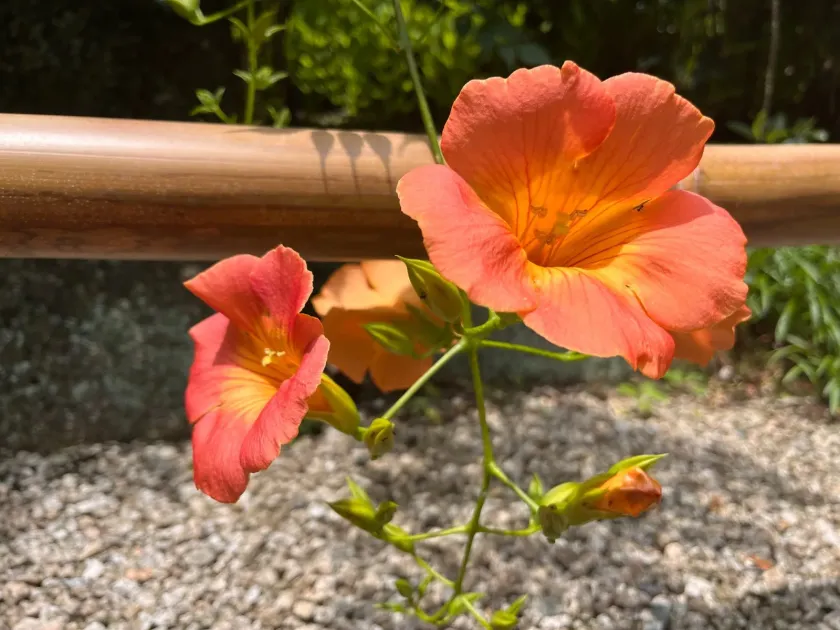
The Chinese trumpet vine (Campsis grandiflora) is a deciduous, woody climber belonging to the Bignoniaceae family. It is highly prized for its large, flamboyant, trumpet-shaped orange-red flowers that create a spectacular display during the peak summer months.
Native to East Asia, specifically China and Japan, this vine thrives in warm temperate climates. It is widely cultivated globally as an ornamental plant for covering walls, fences, and large trellises where its vigorous growth habit can be fully appreciated.
Successful cultivation requires a location with full sun exposure. While the plant can tolerate partial shade, maximum flowering intensity and healthy stem development are achieved only in areas receiving at least six to eight hours of direct sunlight daily.
The ideal soil for the Chinese trumpet vine is fertile, well-drained, and slightly acidic to neutral. Although established plants exhibit a degree of drought tolerance, consistent moisture during the growing season is essential for promoting lush foliage and abundant bloom production.
Maintenance includes systematic pruning to manage its vigorous nature. Pruning is best performed in early spring, cutting back the previous year's growth to a few buds. This practice encourages new, flowering-capable shoots and helps maintain the desired structure of the climber.
Main diseases and pests
Campsis grandiflora is generally considered a robust species with few serious health issues. However, poor soil drainage can lead to root rot, especially in heavy clay soils where water tends to collect around the crown of the vine.
Aphids are the most common insect pests encountered. They tend to cluster on soft, new growth and developing flower buds, draining sap and potentially causing stunted growth or misshapen flowers if the infestation becomes heavy.
Spider mites can also become a problem during hot, dry summer periods. These microscopic pests thrive in low humidity and can cause leaves to become yellow or mottled, often manifesting as fine webbing on the undersides of the leaflets.
Control strategies for pests include washing the foliage with a forceful stream of water or applying insecticidal soaps. For severe infestations, targeted application of appropriate garden insecticides is recommended to preserve the ornamental value of the plant.
Maintaining a healthy, stress-free plant through proper fertilization and watering is the best defense against pests and diseases. A well-nourished vine is significantly more resilient to attacks compared to one struggling with nutrient deficiency or water stress.