
Solenostemon rotundifolius
Solenostemon rotundifolius (Poir.) J. K. Morton
Description
Sowing dates
Solenostemon rotundifolius, commonly referred to as the Hausa potato, is a herbaceous member of the Lamiaceae family that is primarily cultivated for its edible tubers.
Propagation is typically vegetative, utilizing either small tubers or stem cuttings planted directly into the soil once the rainy season has commenced and temperatures are reliably warm.
Farmers usually plant the cuttings at intervals of 30 to 40 centimeters to ensure adequate development of the underground tuber system and sufficient airflow for the foliage.
Soil preparation is a critical initial step, requiring thorough tilling to break up clods and create a friable, well-aerated medium that supports the expansion of the developing roots.
The crop grows rapidly under favorable conditions, completing its vegetative cycle in a relatively short period, which allows for effective scheduling in regions with seasonal rainfall patterns.
Growing requirements
This crop thrives in tropical environments, requiring consistent temperatures and abundant rainfall, which are essential for maintaining active growth throughout the season.
Well-drained sandy loam soils are ideal, as these prevent the waterlogging that often leads to tuber rot and other moisture-related pathological issues in the root zone.
Full sun exposure is preferred for maximum photosynthetic output, as shaded conditions often lead to etiolated stems and significantly reduced tuber yield per plant.
Agronomic management involves regular weeding and hilling-up, a practice that encourages the proliferation of stolons and protects the surface-level tubers from direct sunlight.
While the plant is hardy in tropical settings, providing consistent moisture during the tuber-bulking phase is essential for producing high-quality, market-ready tubers.
Yield
The yield potential of Solenostemon rotundifolius depends on the soil fertility and the timing of rainfall, with harvests typically ranging between 5 and 15 tons per hectare.
Proper management of the cropping environment, including timely planting and minimal weed competition, can significantly boost the uniformity and size of the harvested tubers.
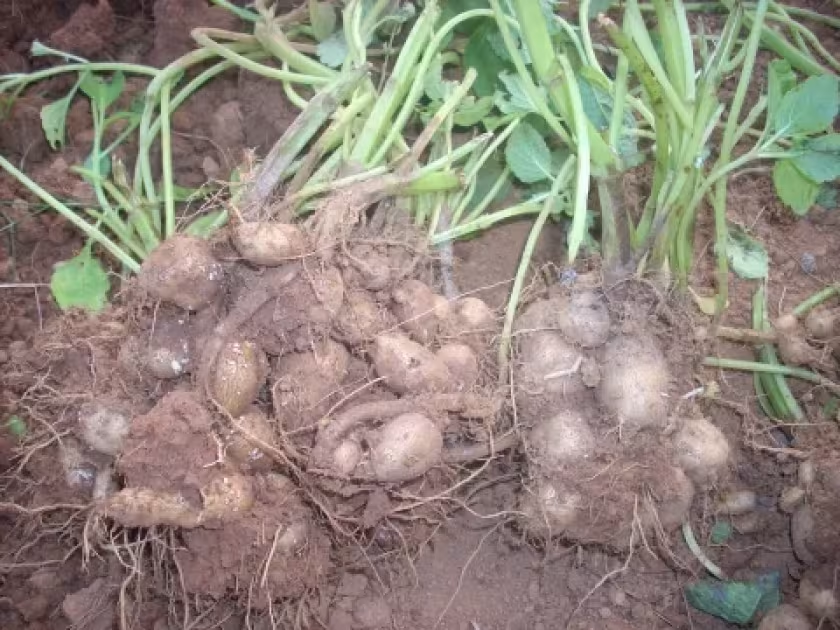
Plants often exhibit a clustered growth habit, meaning that each individual bush can produce a large number of small, oval-shaped tubers that are rich in starch.
Research suggests that applying organic manure during the early stages of development contributes to improved soil structure and higher tuber counts per plant at harvest.
Optimal yields are achieved when the crop is grown in a well-planned sequence, ensuring that it is not subjected to extreme drought stress during its most sensitive growth periods.
Main diseases and pests
Root-knot nematodes represent the most significant biological threat to this crop, as they cause physical damage to the tubers, which often results in secondary bacterial infections.
Fungal pathogens and soil-borne rots are prevalent during periods of excessive rainfall, necessitating good drainage systems to protect the integrity of the harvest.
Various insect pests can attack the foliage, reducing the plant's capacity to synthesize energy, which directly correlates with the final weight and size of the tubers produced.
Integrated pest management strategies, such as crop rotation with non-host species, are highly effective in reducing the pressure from soil-dwelling pathogens over several years.
Field monitoring remains essential to detect early signs of infestation, allowing for quick interventions that can prevent significant economic losses before the harvest begins.
Harvesting
The harvesting process begins once the foliage starts to senesce and turn yellow, which typically occurs four to six months after the initial planting date.
Tubers are carefully hand-harvested to avoid nicks and bruises, as damaged tissue is far more susceptible to spoilage during the post-harvest storage and distribution phase.
After excavation, the tubers should be cleaned of soil and air-dried in a shaded, ventilated area to ensure they are ready for market transport or immediate local consumption.
While the Hausa potato is a valuable food source, the tubers have a limited shelf life and should be consumed or processed into more stable forms shortly after harvesting.
This crop plays a vital role in regional food security, providing a reliable source of carbohydrates in many tropical areas where other traditional crops may struggle to grow.