
Cherry laurel
Prunus laurocerasus L.
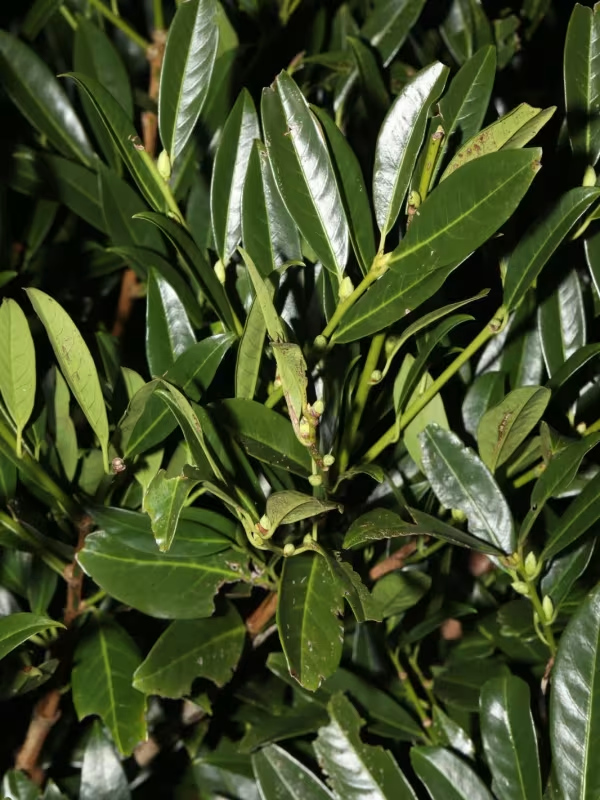
Description
Sowing dates
Propagation of Prunus laurocerasus is primarily conducted via vegetative methods, specifically stem cuttings, to ensure genetic uniformity and desired cultivar characteristics.
Semi-ripe cuttings are typically collected in late summer, choosing healthy current-year growth that shows signs of beginning to lignify.
Cuttings are planted in a sterile, well-draining substrate under mist or high-humidity conditions to facilitate rooting before the onset of winter.
Seed propagation is possible but involves a prolonged stratification process, as seeds possess a physiological dormancy that must be broken by cold temperatures.
Seedlings are usually grown in nursery pots for at least one to two years before being transplanted to their final location to ensure sufficient root development.
Growing requirements
The cherry laurel is a member of the Rosaceae family, known for its dense, leathery, evergreen foliage and its adaptability to various garden environments.
It thrives best in fertile, moisture-retentive, yet well-drained soils with a pH ranging from slightly acidic to slightly alkaline levels.
While known for its tolerance to shade, the plant performs best in locations with partial to full sun, provided it is shielded from severe, desiccating winter winds.
Climate requirements include moderate moisture and protection from extreme, prolonged freezing temperatures that can cause leaf scorch and dieback.
Regular maintenance involves spring fertilization and consistent irrigation during the first few years after planting to establish a deep root system.
Yield
The primary horticultural application of cherry laurel is its use as a structural evergreen plant, ideal for establishing dense screens and living hedges.
The plant responds exceptionally well to shearing and pruning, allowing for formal topiaries and maintained shapes that remain green throughout the winter.
Historically, the leaves were used in pharmaceutical applications due to the presence of prunasin, although they must be handled with caution due to toxicity.
The fruit, a small drupe, serves as a food source for local bird populations, though it is not widely cultivated for human consumption due to flavor profiles.
The wood is hard and durable, occasionally used in small-scale woodworking projects, although it does not hold significant commercial value as a timber crop.
Main diseases and pests
Powdery mildew is a significant fungal threat, especially in sites with poor air circulation, manifesting as a white coating on the leaves and young stems.
Shot-hole disease, caused by various fungal pathogens, results in circular lesions and necrosis on the foliage, which can lead to premature leaf drop.
Scale insects are common pests that colonize the undersides of leaves and stems, extracting plant sap and weakening the overall vitality of the shrub.
Spider mites can become problematic during hot, dry spells, causing chlorotic spotting and stippling that ruins the plant's aesthetic appearance.
- Implement proper spacing to ensure adequate air circulation.
- Apply preventative fungicide sprays during periods of high humidity.
- Monitor for early pest infestations and apply targeted treatments.