
Chambeyronia macrocarpa
Chambeyronia macrocarpa
Description
Growing requirements
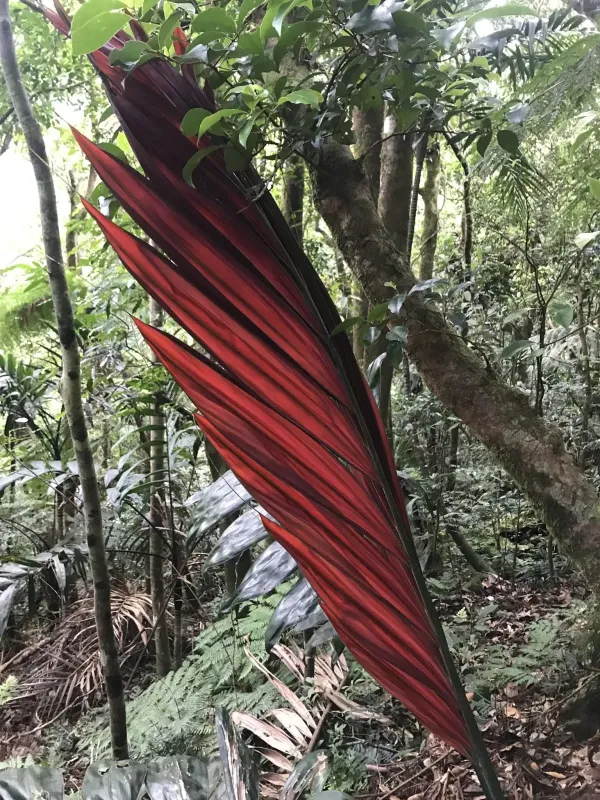
Chambeyronia macrocarpa, commonly known as the Flame Thrower Palm, is a highly prized member of the Arecaceae family. Native to the humid rainforests of New Caledonia, it is famous for the striking red color of its newly emerging fronds.
This species thrives in tropical climates where temperatures remain consistently warm throughout the year. It does not tolerate frost and should be kept in protected environments or conservatories if temperatures drop below 10°C.
For optimal growth, the palm requires a well-draining, nutrient-rich soil mix. A mixture of peat, perlite, and coarse organic matter provides the aeration and moisture retention necessary for a healthy root system.
The plant prefers dappled light or partial shade conditions. While it can tolerate some morning sun, exposure to intense midday sunlight can scorch the foliage, especially in young specimens that have not yet established a strong canopy.
Maintenance involves frequent irrigation to keep the substrate consistently moist but never waterlogged. High ambient humidity is essential for this plant, and regular misting or the use of humidifiers is recommended in indoor settings.
Main diseases and pests
Scale insects are common pests for indoor-grown Chambeyronia. They appear as small, brown, bump-like structures on the underside of fronds and can be manually removed with an alcohol-soaked swab.
Mealybugs may colonize the leaf axils, producing a white, cotton-like substance. Infestations should be treated with systemic insecticides or neem oil applications to ensure the health of the central growing spear.
Spider mites are a significant threat in dry environments. If left unchecked, they can cause a loss of vigor and significant discoloration of the leaves, eventually leading to stunted growth.
Root rot caused by Phytophthora or other pathogens is often a result of poor drainage and overwatering. It is a critical issue that requires strict control over watering intervals and soil composition to prevent.
Regular sanitation of the palm's surroundings is vital to prevent disease outbreaks. Removing dead fronds and debris prevents the buildup of fungal spores and minimizes the hiding spots for common greenhouse pests.