
Chamaesaracha coronopus
Chamaesaracha coronopus
Description
Growing requirements
Chamaesaracha coronopus is a perennial herbaceous plant belonging to the Solanaceae (nightshade) family. Known for its resilience, this species has evolved in arid environments to thrive where other vegetation struggles to survive, exhibiting a low-growing, spreading habit.
The native range of this plant is centered in the southwestern United States and northern Mexico. It is commonly found in desert scrublands, dry plains, and rocky slopes, where it has adapted to withstand high solar radiation and periodic water scarcity.
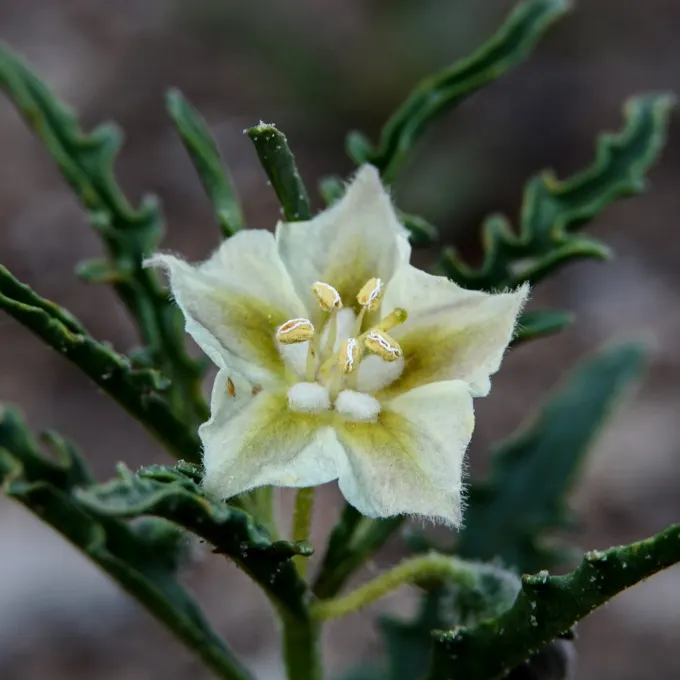
Botanically, the plant is characterized by its finely lobed, pinnatifid leaves, which resemble the foliage of certain wormwood species, distinguishing it from other members of the nightshade family. The flowers are typically solitary, small, and feature the star-like shape common to Solanaceae.
Successful cultivation of Chamaesaracha coronopus requires exceptionally well-drained, sandy, or gravelly soil conditions. The root system is highly sensitive to waterlogging, necessitating a substrate that prevents moisture accumulation around the crown to avoid physiological stress.
Climatic preferences for this species include high diurnal temperatures and low atmospheric humidity. It is a heliophilic plant, requiring full sun exposure to complete its life cycle effectively. In regions with frequent rainfall, protecting the plants from excess moisture is essential for their long-term survival.
Main diseases and pests
The primary threats to this species include fungal infections such as root rot and wilt, which are almost exclusively triggered by improper irrigation or water-logged soils. These conditions compromise the plant's vascular system, leading to rapid decay.
Pests are generally those that favor Solanaceous hosts, including aphids and spider mites, which can cause significant damage during hot, dry spells. Integrated pest management, focusing on early detection and maintaining plant vigor through proper site selection, is the recommended approach for this culture.