
Chamaesaracha coniodes
Chamaesaracha coniodes
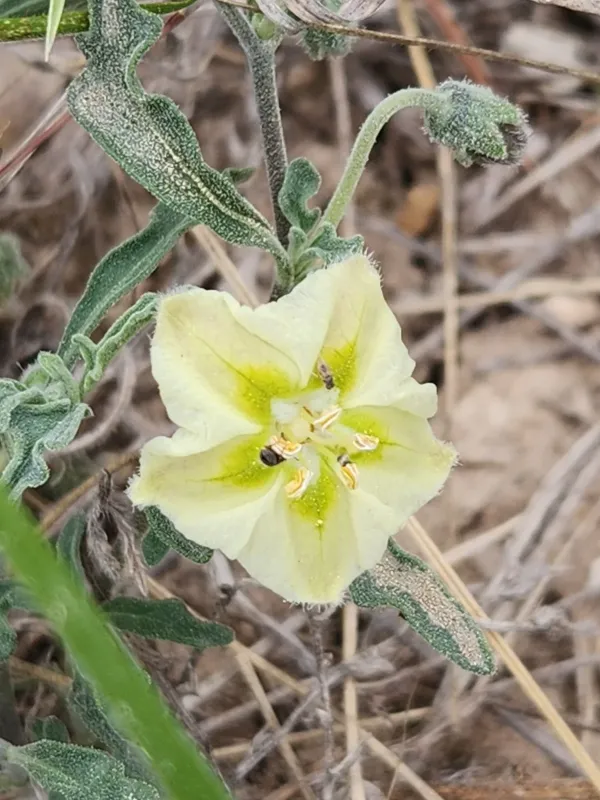
Description
Growing requirements
Chamaesaracha coniodes belongs to the Solanaceae family, commonly known as the Nightshade family. It is a perennial herbaceous plant recognized for its prostrate, low-growing habit which serves as an adaptation to harsh desert environments.
The species is native to the arid regions of North America, particularly the southwestern United States and northern Mexico. It thrives in open, exposed desert scrublands where rainfall is intermittent and unpredictable.
This plant prefers well-draining, sandy, or rocky soil compositions. Its ability to extract moisture from nutrient-poor, arid soils makes it a significant representative of desert plant communities.
Botanically, C. coniodes is characterized by its grayish foliage covered with fine hairs, which significantly reduces water transpiration. The flowers exhibit the classic structure of the Solanaceae, usually appearing with a delicate, pale coloration.
The cultural requirements are strictly linked to high light intensity and low atmospheric humidity. It requires a specific microclimate that mimics its natural desert environment to ensure long-term viability.
Main diseases and pests
Like many wild relatives of crops in the Solanaceae family, Chamaesaracha coniodes is susceptible to specific insect herbivores. Aphids and various mites are the most common pests encountered in their native range.
Fungal pathogens represent the primary threat to the plant, particularly under conditions of waterlogging or high humidity. Excessive moisture often results in root rot, which is the leading cause of mortality in non-desert environments.
Invasive species competition constitutes an increasing threat to existing populations. As the landscape changes, the plant's ability to maintain its niche is challenged by more aggressive, non-native plant species.
Environmental stressors, such as prolonged drought coupled with uncharacteristic extreme heat, can diminish the reproductive success of the plant, potentially leading to a decline in local population density.
Currently, there are no widespread agricultural protection protocols for this species, as it is primarily managed for ecological conservation rather than commercial agricultural production.