
Southern mountain misery
Chamaebatia australis
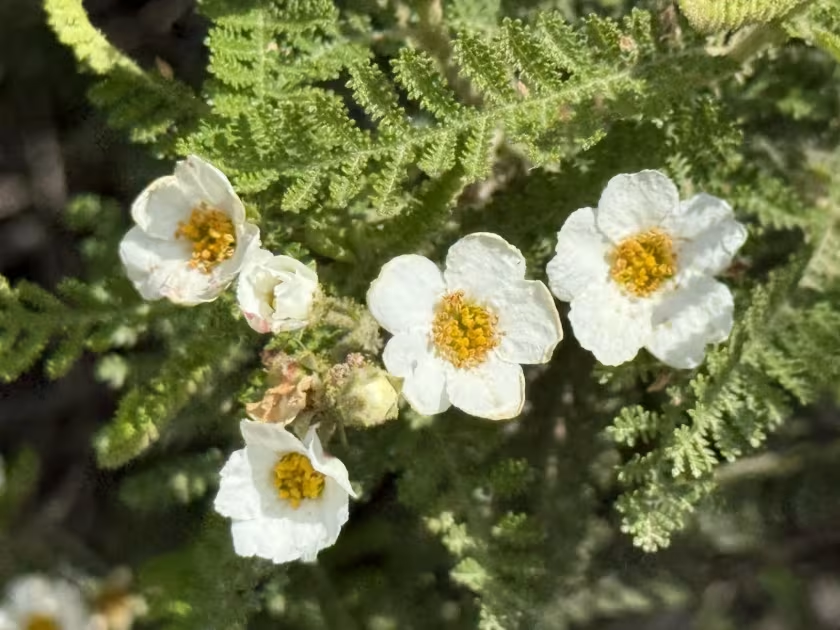
Description
Growing requirements
Chamaebatia australis, commonly known as southern mountain misery, is an evergreen shrub belonging to the Rosaceae family. It is distinct for its adaptation to specific ecological niches, primarily found in rocky and well-drained terrains.
The plant thrives in Mediterranean-like climates where exposure to direct sunlight is abundant. It exhibits remarkable drought tolerance, making it an excellent candidate for xeriscaping and sustainable garden design projects.
Regarding soil preferences, it requires excellent drainage. Any accumulation of water around the root zone will inevitably lead to stress and decline. Soils should ideally have a neutral or slightly acidic pH to promote healthy nutrient uptake.
Cultivation practices focus on mimicking the plant's natural habitat. Irrigation should be minimal and withheld during the dormant season. Pruning is rarely needed but can be used to manage the size and shape of the shrub if necessary.
Its primary use is ornamental, serving as a textural groundcover in rock gardens or naturalistic landscape settings. Its unique foliage provides aesthetic value throughout the year, especially in regions with mild winters.
Main diseases and pests
The most significant threat to Chamaebatia australis is root rot caused by poor soil drainage. When the soil remains saturated for extended periods, the root system loses its ability to function, leading to rapid plant death.
Pests such as aphids and spider mites may occasionally infest the foliage during hot, dry spells. Monitoring the undersides of leaves is essential to detect early signs of infestation and prevent large-scale outbreaks.
Fungal leaf spots can occur if humidity levels are consistently too high, particularly in environments with poor air circulation. Proper spacing between individual plants is the best preventative measure against such diseases.
Soil-borne pathogens like nematodes can also pose a risk if the plant is established in infected soil. Pre-planting site preparation, including soil solarization or the use of sterile compost, is highly recommended.
Maintaining the overall vigor of the plant through proper site selection and avoiding mechanical injury is the best defense against both pests and environmental stresses throughout the growing season.