
Ceratocephala testiculata
Ceratocephala testiculata
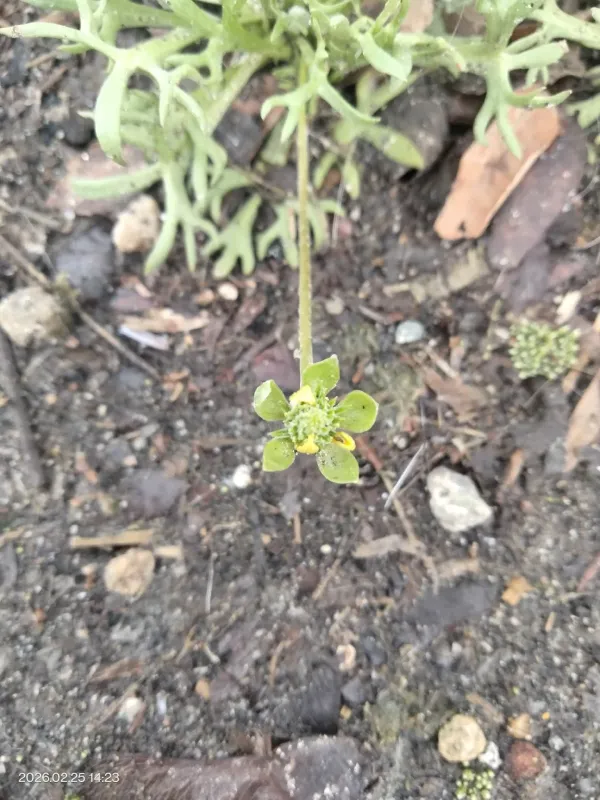
Description
Sowing dates
Ceratocephala testiculata is an annual spring ephemeral that begins its rapid growth as soon as soil temperatures allow. Its life cycle is perfectly synchronized with the early spring thaw, giving it a head start over most crop species.
Seed germination typically occurs in late winter or early spring, depending on the climatic zone. The seeds possess a unique ability to germinate rapidly in cool, moist conditions, allowing the weed to quickly establish a population.
In winter wheat fields, the weed competes aggressively for nitrogen and moisture during the tillering phase of the crop. Because it matures so quickly, it completes its life cycle before the main crop reaches its peak growth stage.
The total vegetative period is short, often spanning only a few weeks from emergence to seed dispersal. By the time the weather warms significantly, the plant has already dropped its seeds and dried out.
Early-season mechanical tillage, such as light harrowing, is effective in disrupting the weed's development. Proper timing is critical to ensure the soil surface is disturbed while the weed seedlings are in their vulnerable stages.
Growing requirements
As a member of the Ranunculaceae family, this species thrives in open, sunny environments with minimal competition. It is commonly found on pastures, fallow fields, and roadsides where the vegetation cover is sparse.
The plant is highly adaptable to various soil types but prefers well-drained, slightly alkaline to neutral soils. It does not require high levels of soil fertility, making it a persistent presence on degraded lands.
Environmental requirements are minimal due to its ephemeral lifecycle. It avoids the challenges of summer heat and drought by completing its reproduction cycle well before the arrival of harsh summer conditions.
The plant exhibits high tolerance to cold, surviving frost events common in early spring. This resilience ensures that the population remains stable regardless of the variability in annual weather patterns.
To control the habitat conditions, maintaining a dense and vigorous crop canopy is essential. Shading prevents the development of Ceratocephala testiculata, as it is highly sensitive to light competition from taller species.
Main diseases and pests
The primary concern regarding this species is its impact on livestock grazing. The fruit of the plant is covered in sharp spines, which can cause significant physical trauma to the mouths and digestive tracts of sheep and cattle.
In crop production, it functions as a nutrient thief. Its aggressive uptake of moisture and phosphorus in the early spring can lead to reduced biomass in cereals if the infestation density is high enough.
Chemical management usually involves the application of selective herbicides during the rosette or pre-flowering stage. Because the plant is a member of the buttercup family, certain standard broadleaf herbicides are highly effective.
Preventative measures include the use of clean, certified seed lots to avoid spreading the weed into uninfested areas. Ongoing monitoring of pasture health is vital to detect and manage early outbreaks before seed set.
- Use of systemic herbicides to control broadleaf weeds.
- Maintaining healthy pasture density to crowd out weed seedlings.
- Careful monitoring of livestock grazing to avoid thorny patches.