
Ceratocephala falcata
Ceratocephala falcata
Description
Growing requirements
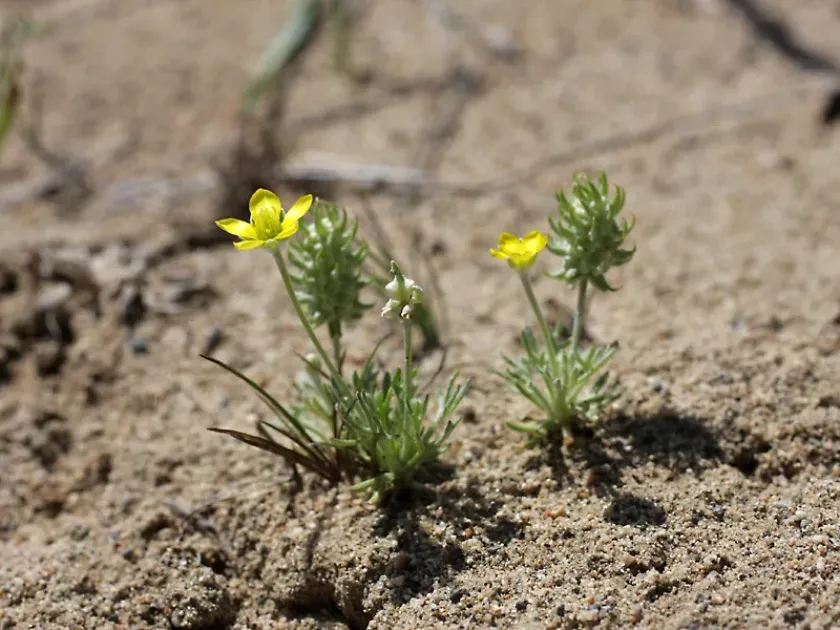
Ceratocephala falcata is a small annual herb belonging to the buttercup family, Ranunculaceae. As a classic ephemeral, it completes its life cycle within a very short spring window, effectively avoiding the summer drought.
The species is primarily found in arid and semi-arid regions, including steppes and rocky slopes. It thrives in environments with high solar radiation and soils that drain very quickly.
The plant demands well-aerated soils with minimal organic matter buildup. It is highly intolerant of competitive shade and waterlogged conditions, making it unsuitable for cultivation in high-input agricultural systems.
Botanically, it is characterized by its basal rosettes and tiny, early-blooming yellow flowers. The seeds are typically equipped with specialized structures that assist in dispersal through wind or animal activity.
While not a traditional agricultural crop, understanding its ecological niche is valuable for range management and biodiversity conservation in semi-arid grazing lands.
Main diseases and pests
Due to its rapid development, Ceratocephala falcata is rarely plagued by the common fungal or bacterial pathogens that affect long-season cultivated crops.
Occasional infestations by opportunistic sap-sucking insects may occur during warm, early springs, but these rarely result in significant damage to the plant's reproductive success.
The most substantial threats to its population density are habitat destruction, such as intensive tillage or heavy overgrazing, which disrupts the seed bank cycle.
Competition from invasive fast-growing grasses can also suppress the growth of this fragile ephemeral, as they limit the light availability during its sensitive germination period.
There are no known chemical control protocols or management strategies specifically designed for this plant, as it is considered a wild botanical element rather than a managed crop.