
Giant scabious
Cephalaria gigantea
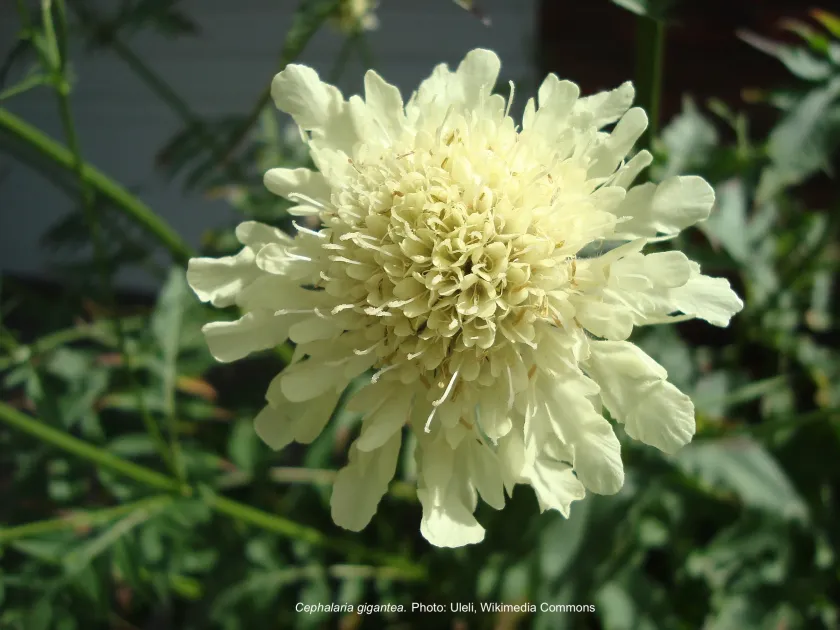
Description
Sowing dates
Sowing of giant scabious is best performed in early spring as soon as the soil can be worked, or through autumn sowing to allow for natural cold stratification of the seeds.
Seeds should be planted at a depth of approximately 1.5–2 cm. When direct sowing into the ground, ensure there is a space of about 60 cm between plants to accommodate their significant size.
Greenhouse propagation allows for earlier blooming. Seeds sown in trays in late winter will germinate readily at temperatures between 18 and 22 degrees Celsius.
Seedlings should be kept consistently moist during the first weeks. Once they reach the true-leaf stage, they can be hardened off before being moved outdoors.
For best results, transplant young plants to their final location once the risk of heavy frost has passed, ensuring they have enough space to spread their roots.
Growing requirements
Giant scabious (Cephalaria gigantea) is a robust herbaceous perennial of the Caprifoliaceae family, known for its ability to grow up to two meters in height.
The plant thrives in full sun, which is essential for developing the strength of its tall, upright flower stems that would otherwise flop in shaded conditions.
It prefers deep, fertile, and well-drained soil. While it is adaptable to various soil types, it dislikes waterlogged sites which can lead to root decay.
The plant is relatively drought-tolerant once established, but regular watering during the peak of summer is recommended to maintain optimal growth and nectar production.
Low maintenance is one of the key benefits of this plant. It requires minimal fertilization; a top dressing of compost in early spring is usually sufficient to support annual growth.
Yield
The primary agricultural and economic value of Cephalaria gigantea lies in its exceptional nectar production, making it a highly favored plant for beekeepers.
In a gardening context, its height makes it an excellent choice for the back of borders, acting as a structural plant that adds vertical interest to the landscape.
The plant is known for its long blooming season, providing a stable source of food for pollinators throughout the summer months when other sources might fade.
Due to its massive vegetative growth, it can also be utilized for wildlife gardening, providing shelter and forage for beneficial insects and garden birds.
It is rarely used for fodder or commercial medicine, but its aesthetic and ecological value in restoration projects and large flower gardens remains its main utility.
Main diseases and pests
Giant scabious is notably hardy and shows high resistance to most common garden pests and diseases, making it a reliable choice for low-input landscapes.
Excessive soil moisture can lead to mild fungal issues. Ensuring proper spacing and airflow between individual plants is the best preventative measure against mold.
During dry summers, aphids may occasionally congregate on the flower heads. These can be managed with biological controls or simple water rinses if the infestation is light.
Powdery mildew can occur in stagnant, overly humid conditions. Avoiding overhead irrigation and keeping the base of the plant clean of debris helps mitigate this risk.
If serious pest or disease pressure is detected, systemic fungicides or insecticidal soaps should be used according to standard agricultural guidelines for ornamentals.
Harvesting
Seed harvesting should take place in late summer. The flower heads should be monitored until they turn a dark brown or straw-like color and feel dry.
The seed heads should be cut and placed in paper bags to finish drying, as the seeds will naturally begin to shed once they reach full maturity.
Once dried, the heads can be gently shaken to release the seeds. Any debris should be winnowed out to ensure high purity of the stored seed material.
Seeds should be stored in a cool, dark, and dry environment. They remain viable for several years if kept away from humidity and temperature fluctuations.
For those who prefer natural propagation, allowing the seeds to drop naturally is a common practice, provided the surrounding garden space is ready for new arrivals.