
Centropogon cornutus
Centropogon cornutus
Description
Growing requirements
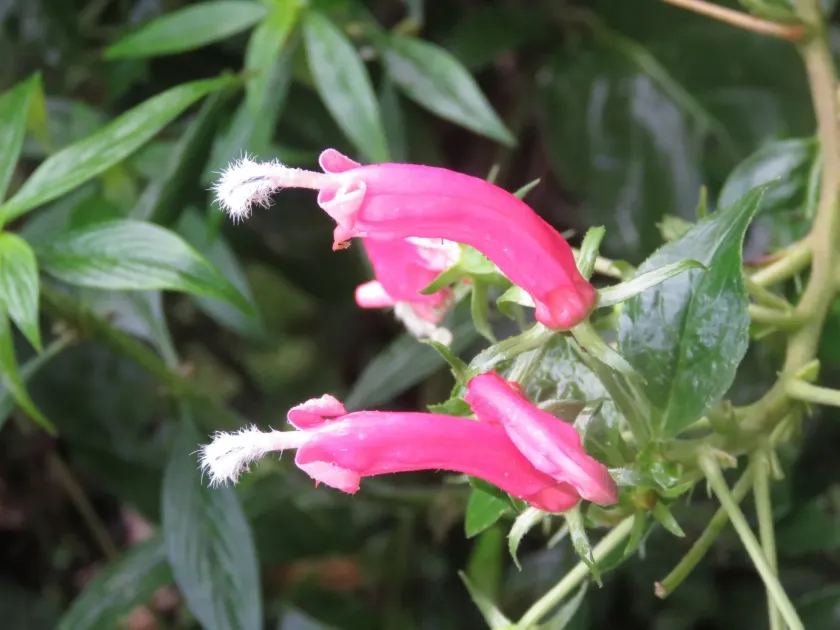
Centropogon cornutus is a distinct species belonging to the Campanulaceae family, native to the tropical regions of Central and South America. It is highly regarded in horticulture for its long, tubular, vibrant red flowers that are specialized for pollination by hummingbirds.
As a subshrub, it exhibits a perennial growth habit, often reaching significant height in its natural rainforest habitat. The plant features elongated, lance-shaped leaves that provide a lush appearance throughout the year, supporting its role as an attractive ornamental specimen.
Successful cultivation of this species requires strict environmental control. It thrives in high-humidity settings and warm temperatures, making it unsuitable for outdoor growth in temperate climates, where it must be maintained in greenhouses or indoor environments.
The soil should be nutrient-rich, airy, and well-draining to prevent root compaction. A potting mix consisting of peat moss, perlite, and decomposed organic matter provides the necessary structure and moisture retention required for optimal development.
Beyond its botanical interest, Centropogon cornutus is primarily utilized in decorative landscaping within conservatories and indoor gardens. Its ability to bloom under indirect or moderate light levels makes it a versatile choice for specialized interior plant collections.
Main diseases and pests
The most common pests affecting this plant in greenhouse settings include spider mites and whiteflies. These insects thrive in confined spaces, necessitating consistent monitoring and the application of integrated pest management strategies.
Fungal issues, particularly root rot, represent the primary health threat when the substrate remains overly saturated. Proper irrigation practices and adequate ventilation are essential components of maintaining plant health and preventing systemic infections.